


Personal Injury – Defective Motorcycle Accidents
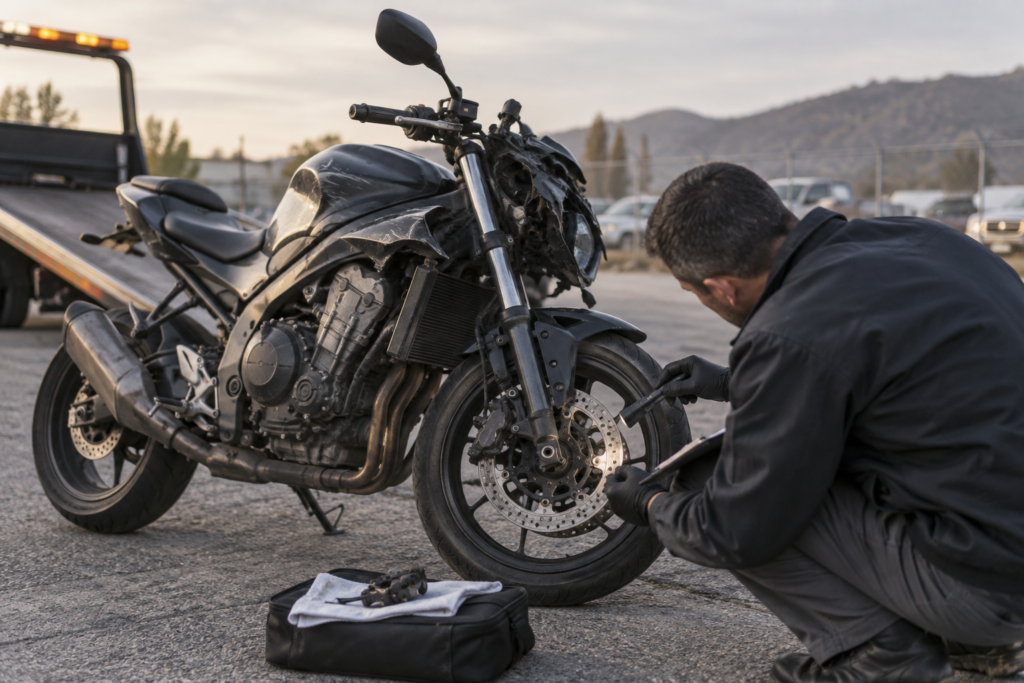
A motorcycle crash is not always caused by a rider or another driver. In some cases, a defect in the motorcycle, one of its components, or related equipment may contribute to loss of control, braking failure, tire failure, steering problems, fire, or another dangerous event. When that happens, the claim may involve California product-liability law in addition to the ordinary investigation of the crash.
The fact that a motorcycle malfunctioned does not automatically prove a defective-product claim. The evidence must identify the product, connect a legally recognized defect to the accident, and show that the defect was a substantial factor in causing the injury. Preserving the motorcycle and failed component can therefore become especially important.
A Defective Motorcycle Claim Can Involve Several Types of Defect
California product-liability law generally recognizes manufacturing defects, design defects, and failure-to-warn theories. The correct theory depends on what went wrong.
A manufacturing defect concerns a product that departs from its intended design or from otherwise identical units. For example, a component may have been assembled, cast, fastened, or manufactured incorrectly even though the underlying design was sound.
A design-defect claim instead questions whether the product was made according to its intended design but that design itself created an unreasonable safety problem under the applicable legal test.
A warning claim concerns risks that should have been communicated through adequate instructions or warnings. Each theory requires its own factual and legal analysis.
Motorcycle Components Can Fail in Different Ways
A motorcycle contains systems whose failure can immediately affect stability and control. Depending on the circumstances, an investigation may focus on brakes, tires, wheels, steering components, suspension, throttle controls, fuel systems, electrical systems, frames, fasteners, or another component.
Aftermarket parts can create additional questions. Investigators may need to determine who manufactured the original motorcycle, who produced the component, who installed or modified it, whether maintenance was performed correctly, and whether the failure arose from a product defect rather than wear, misuse, collision damage, or improper service.
Do Not Destroy or Repair Critical Evidence Too Quickly
If a serious crash may involve mechanical failure, repairing, selling, scrapping, or altering the motorcycle before appropriate inspection can make the claim much harder to evaluate. The motorcycle, failed part, photographs, maintenance records, purchase records, recall information, repair invoices, and available electronic data may all become relevant.
The same principle applies to helmets or other equipment when a specific product failure is part of the claim. Evidence preservation should be tailored to the actual defect theory rather than assuming every item involved in the crash must be retained forever.
Product Liability Is Different From Ordinary Driver Negligence
In a conventional motorcycle collision, the central question may be whether another driver failed to yield, followed too closely, made an unsafe turn, opened a door into the rider’s path, or otherwise failed to use reasonable care.
A defective-motorcycle case may shift part of the investigation toward the manufacturer, distributor, seller, component manufacturer, repair facility, or another entity depending on what caused the failure. More than one theory can exist in the same accident. A negligent driver and a defective component, for example, could both contribute to the same crash.
The refreshed article on common causes of motorcycle accidents in California explains several non-defect collision risks that may also need to be ruled in or out.
California Product Liability Does Not Require Every Defendant to Have Made the Whole Motorcycle
Product cases can involve different participants in the chain of distribution, but liability is not automatic merely because a company touched the product somewhere along the way. The evidence must identify which defendant produced, sold, distributed, or was otherwise legally responsible for the relevant product or component and how the defect caused the injury.
Component-part cases can become particularly technical. An investigation may need to distinguish between a component that was defective on its own and a problem created by the way a component was integrated, installed, modified, maintained, or used.
Expert Inspection May Be Necessary
A failed component often requires expertise beyond ordinary observation. Engineers, metallurgists, mechanics, reconstruction specialists, or other qualified experts may examine fracture surfaces, wear patterns, deformation, materials, design specifications, testing, maintenance history, and the sequence of the crash.
The article on the role of accident reconstruction experts in legal cases explains how technical evidence can help evaluate movement, impact dynamics, and competing explanations for an accident.
A Recall Can Be Important but Is Not the Whole Case
Recall information can be relevant when it concerns the motorcycle or component involved in the crash. It may identify a known problem, affected model years, or a recommended repair. But the existence of a recall does not automatically prove that the recalled condition caused a particular accident.
The opposite is also true. The absence of a recall does not automatically prove that a product was safe or non-defective. Product-liability analysis depends on the evidence in the individual case.
Damages Depend on the Injuries and Their Consequences
Motorcycle crashes can cause fractures, road rash, head injuries, spinal injuries, internal injuries, burns, and other serious harm. Recoverable damages in a valid California personal injury claim can include economic losses such as medical expenses and lost earnings as well as non-economic harm such as pain, suffering, inconvenience, and emotional distress when supported by the evidence.
The article on defective products and California product liability claims provides a broader explanation of manufacturing, design, and warning-defect theories beyond motorcycle cases.
Defective Motorcycle Claims in West Covina and Los Angeles County
For a motorcycle crash in West Covina, the San Gabriel Valley, or elsewhere in Los Angeles County, the investigation should begin with the actual mechanism of the accident. If there is reason to suspect a brake problem, tire failure, steering failure, structural defect, fire, or another mechanical issue, preserving the motorcycle and its components can keep important evidence from disappearing.
A product defect should not be assumed merely because something broke. The strongest case is built by determining what failed, why it failed, who was legally responsible for the product or work involved, and whether that failure actually caused or contributed to the rider’s injuries.
