Construction Accidents and Personal Injury: Protecting Your Rights as a Worker

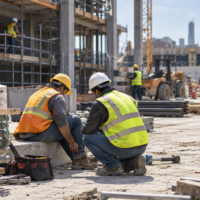
A construction worker injured on the job may have more than one legal issue to consider. Workers’ compensation is generally the starting point for an injury arising out of employment, but a separate personal injury claim may also be possible when someone other than the employer contributed to the accident. The two systems are different and should not be blended together.
That distinction is especially important on construction sites, where general contractors, subcontractors, property owners, equipment companies, delivery drivers, manufacturers, and other businesses may be working in the same location. Protecting your rights starts with medical care, prompt reporting, and preserving evidence of how the incident occurred.
Report the Injury and Get Necessary Medical Care
California’s Division of Workers’ Compensation advises injured workers to notify their supervisor as soon as possible. The agency warns that failing to report an injury within 30 days can jeopardize workers’ compensation benefits. For an emergency, call 911 or go to an emergency department and tell the medical staff the injury is work-related.
Your employer generally must provide or mail a DWC-1 claim form within one working day after learning about the injury or illness. Returning the completed employee section starts the formal workers’ compensation claim process. Keep a copy of the form and other correspondence.
Workers’ Compensation and Personal Injury Claims Are Different
Workers’ compensation is designed to provide medical treatment and certain disability and return-to-work benefits for job-related injuries without requiring the worker to prove ordinary negligence by the employer. The system does not provide pain-and-suffering or punitive damages.
A civil personal injury claim follows a different framework. If a third party caused or contributed to the construction accident, the worker may need to evaluate whether a separate negligence or product liability claim exists in addition to workers’ compensation. That possibility depends on the relationships between the companies and the facts of the accident.
Who Can Be a Third Party on a Construction Site?
A third party can be a person or company other than the injured worker’s employer. Depending on the project, potential third-party issues may involve another subcontractor, a property owner, an equipment rental company, a manufacturer, an outside delivery company, a maintenance provider, or another entity whose conduct contributed to the injury.
The mere presence of multiple companies does not create liability. A civil claim still requires evidence connecting a particular person’s or entity’s negligence or defective product to the accident.
Preserve the Job-Site Evidence
Construction sites change by the hour. Equipment gets moved, temporary barriers are removed, scaffolding is altered, trenches are filled, debris is cleared, and crews leave the project. If it can be done safely, photographs or video of the location can be valuable.
Identify the equipment involved, the companies present, witnesses, supervisors, and any person who gave instructions related to the task. Preserve photographs, text messages, work orders, training documents in your possession, equipment information, and the clothing or protective equipment involved in the incident. Do not interfere with an active safety investigation or remove employer property without authorization.
Cal/OSHA May Investigate Serious Workplace Accidents
Cal/OSHA enforces California workplace safety regulations. Employers must immediately report work-related deaths and serious injuries or illnesses to the Division of Occupational Safety and Health as required by Title 8 regulations. Construction employers are also subject to California-specific safety orders that address areas such as fall protection, ladders, scaffolds, electrical work, excavation, heavy equipment, and other hazards.
A safety citation can be important evidence, but it is not a substitute for analyzing civil liability. The legal claim still depends on who owed a duty, what conduct caused the incident, the worker’s employment relationships, and the applicable legal framework.
Common Construction Accident Issues
Construction injuries can involve falls from elevations, scaffold or ladder incidents, struck-by accidents, falling objects, electrical injuries, trench or excavation hazards, machinery, vehicle collisions, defective tools, structural failures, and unsafe work areas.
Different incidents point to different evidence. A scaffold fall may involve erection and inspection records. An equipment injury may require maintenance and manufacturer information. A delivery-truck collision may involve driver and vehicle evidence. The investigation should follow the mechanism of the accident rather than rely on a generic construction-injury checklist.
Medical and Wage Records Matter in Both Systems
Workers’ compensation and a potential third-party claim may both rely on accurate medical documentation, but the benefits and damages are not identical. Keep medical records, work restrictions, wage information, and documentation of time missed from work.
If a third-party personal injury claim exists, damages may potentially include categories not available through workers’ compensation, including non-economic harm, depending on the facts and applicable law. Coordination between claims can also create reimbursement or lien issues that should be evaluated before settlement.
Do Not Assume the Employer Is the Only Relevant Company
After a serious site accident, workers understandably focus on their immediate employer because that is who schedules the work and handles the workers’ compensation claim. A careful investigation should also identify who owned or controlled the work area, who supplied or maintained equipment, which companies were performing nearby work, and whether another entity created the hazard.
At the same time, not every unsafe condition supports a separate lawsuit. California workers’ compensation law generally limits ordinary civil claims against the employer for covered workplace injuries, subject to statutory exceptions. The point is to identify the correct legal path, not to force every construction accident into a personal injury lawsuit.
Construction Injury Help in West Covina and Los Angeles County
Construction activity across West Covina, the San Gabriel Valley, and Los Angeles County often involves multiple contractors and vendors. For an injured worker, the useful first step is to separate the workers’ compensation claim from any possible third-party negligence claim and preserve evidence before the site changes.
The firm’s Personal Injury page provides broader information about civil injury claims. A construction accident review should identify who employed the worker, who controlled the work being performed, which companies were involved, what equipment or property condition contributed to the accident, and what medical and wage losses followed.
[START_FAQ]
Q: What should I do after a construction accident in California?
A: Get necessary medical care, report the injury to your supervisor promptly, request and return the DWC-1 claim form, preserve photographs and witness information if it is safe to do so, and keep copies of medical and employment records related to the injury.
—
Q: Is workers’ compensation my only option after a construction injury?
A: Not always. Workers’ compensation is generally the primary remedy against an employer for a covered work injury, but a separate civil claim may need to be evaluated if a third party such as another contractor, property owner, equipment company, manufacturer, or driver contributed to the accident.
—
Q: Can I recover pain and suffering through California workers’ compensation?
A: Workers’ compensation benefits do not include damages for pain and suffering or punitive damages. A qualifying third-party personal injury claim uses a different damages framework, which is one reason the two systems should be analyzed separately.
—
Q: Why is early evidence preservation important after a construction accident?
A: Construction sites change quickly. Equipment can be moved, temporary structures altered, debris removed, and witnesses reassigned. Photographs, video, witness information, equipment identifiers, and company names can help preserve how the site appeared when the incident occurred.
—
Q: Does The Law Firm of Oscar A. Ischiu review construction accident personal injury claims?
A: Yes. The firm can review construction injury matters to determine whether the facts involve a potential third-party personal injury claim in addition to workers’ compensation, including contractor relationships, site control, equipment issues, evidence, medical harm, and damages.
[END_FAQ]

