Pedestrian Personal Injury Accidents in California

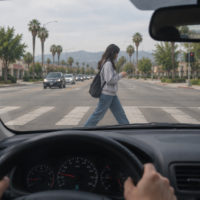
A pedestrian personal injury accident can leave an injured person with medical treatment, missed work and immediate questions about insurance and fault. Because a pedestrian has no vehicle structure around them, the physical consequences can be severe. Legally, however, the claim still depends on evidence showing how the collision occurred and whose conduct contributed to it.
California has specific right-of-way rules for drivers and pedestrians, but those rules work together with broader negligence and comparative-fault principles. A crosswalk can be important, but it is not the only fact that determines civil liability.
Get Medical Care and Report the Collision
After a vehicle-pedestrian collision, safety comes first. Call 911 when there are injuries or an unsafe roadway condition. If the driver leaves the scene, give law enforcement as much information as possible about the vehicle, direction of travel and any partial plate or identifying details.
Seek appropriate medical evaluation. Pedestrian crashes can cause fractures, head injuries, internal injuries, spinal injuries, soft-tissue trauma and other harm. Symptoms may not all be obvious at the scene, particularly when the person is in shock.
California Drivers Must Yield in Crosswalks
California Vehicle Code section 21950 requires drivers to yield the right-of-way to pedestrians crossing within a marked crosswalk or an unmarked crosswalk at an intersection. Drivers must exercise due care and reduce speed or take other action needed to safeguard pedestrians.
The same statute also places responsibilities on pedestrians. A pedestrian may not suddenly leave a curb or other place of safety and walk or run into the path of a vehicle that is so close as to constitute an immediate hazard. The law therefore does not support a simplistic rule that one side is always responsible.
Crossing Outside a Crosswalk Does Not Automatically End a Claim
California law contains rules for pedestrians crossing a roadway outside a marked or unmarked crosswalk. Those rules can affect the fault analysis, but an alleged pedestrian violation does not automatically give a driver permission to act negligently.
California comparative-fault principles allow responsibility to be divided. If both the driver and pedestrian contributed to the accident, damages can be reduced according to the pedestrian’s percentage of responsibility rather than necessarily eliminated.
Preserve Scene Evidence Before It Changes
Pedestrian cases often turn on visibility, timing and roadway geometry. Photograph the intersection or collision area, traffic signals, crosswalk markings, lane layout, street lighting, signs, parked vehicles, sight obstructions and vehicle damage. If clothing, shoes, a phone or personal property was damaged, preserve those items when they may be relevant.
Witnesses can be critical. A driver and pedestrian may remember the event differently, while an independent witness may have seen the traffic signal, vehicle speed or pedestrian movement. Nearby businesses, homes, buses or other vehicles may also have video.
Hit-and-Run Accidents Require Additional Insurance Review
A pedestrian may still have legal and insurance options even when the driver is not immediately identified. Prompt police reporting and preservation of video can help efforts to identify the vehicle. Depending on the injured person’s circumstances and available policies, uninsured-motorist coverage may also require review.
Do not assume that no identified driver means no potential recovery. The available options depend on the facts and insurance relationships.
Medical Records and Daily Limitations Matter
An injury claim should document more than the first emergency-room bill. Follow-up care, imaging, therapy, surgery, medication, assistive devices and future treatment may be relevant when medically supported. Employment records can help prove lost wages or reduced earning capacity.
Non-economic harm can include pain, physical limitations, emotional distress and loss of enjoyment of ordinary activities. Those losses should be described with specific evidence rather than generic language.
Be Careful With Early Insurance Statements
An insurer may contact an injured pedestrian soon after the crash to ask for a recorded statement, medical authorization or settlement discussion. Basic cooperation may be required under an applicable policy, but a seriously injured person should understand which company is calling, whose interests it represents, and what information is being requested.
Statements made before the person has reviewed the scene evidence or understood the medical condition can later become part of a fault or damages dispute.
Pedestrian Claims in West Covina and Los Angeles County
Pedestrians in West Covina and throughout the San Gabriel Valley share roads with commuters, commercial vehicles, rideshare drivers, buses and other traffic moving through Los Angeles County. A collision may happen in a marked crosswalk, a parking area, a driveway, at an intersection, or on a roadway without a nearby signal.
The firm’s Personal Injury page provides broader information about injury representation. The legal analysis should follow the evidence. Determine where each person was, what traffic controls applied, what the driver could see, how the pedestrian moved, whether speed or distraction played a role, and how the injuries affected the person’s life.
[START_FAQ]
Q: Do California drivers have to yield to pedestrians in crosswalks?
A: Yes. Vehicle Code section 21950 requires a driver to yield to a pedestrian crossing within a marked crosswalk or an unmarked crosswalk at an intersection, while also requiring pedestrians not to suddenly enter the path of a vehicle that is too close to stop safely.
—
Q: Can a pedestrian have a claim if they crossed outside a crosswalk?
A: Potentially. Crossing location and pedestrian conduct can affect fault, but California comparative-fault principles can divide responsibility when both the driver and pedestrian contributed to the collision.
—
Q: What evidence is useful in a pedestrian accident case?
A: Useful evidence can include scene photographs, crosswalk and signal information, surveillance or dashcam video, witness statements, vehicle damage, police reports, medical records, clothing or personal property damage, and records showing income loss.
—
Q: What if the driver leaves the scene?
A: Report the hit-and-run promptly, preserve any video or witness information that could identify the vehicle, and review available insurance. Depending on the circumstances, uninsured-motorist coverage may be relevant.
—
Q: Does The Law Firm of Oscar A. Ischiu handle pedestrian personal injury accidents?
A: Yes. The firm handles pedestrian accident cases, including disputed fault, crosswalk collisions, hit-and-run incidents and serious injuries. People injured in West Covina, the San Gabriel Valley, and Los Angeles County can contact the office to review the accident, evidence, insurance and potential claims.
[END_FAQ]

