


West Covina Truck Accident Attorney
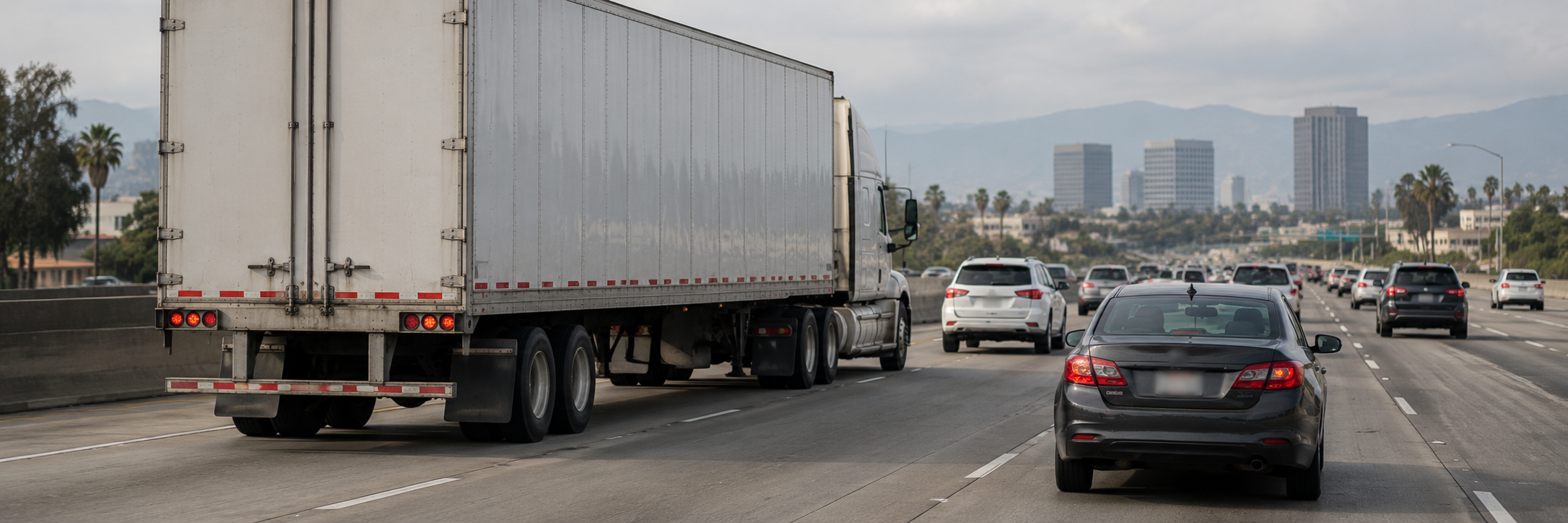
Crashes involving commercial trucks can cause devastating injuries because of the size, weight, and stopping distance of tractor-trailers and other large commercial vehicles. They can also be significantly more complicated than an ordinary car accident claim. The truck driver may be only one part of the investigation. A trucking company, maintenance contractor, cargo loader, shipper, vehicle owner, or another party may also bear responsibility depending on how the crash happened.
The Law Firm of Oscar A. Ischiu represents people injured in truck accidents in West Covina, throughout the San Gabriel Valley, and across Los Angeles County. Attorney Oscar A. Ischiu brings an uncommon perspective to these cases because he owned and operated a trucking company before becoming an attorney. That firsthand experience helps him understand how trucking businesses operate, how commercial vehicles are maintained and dispatched, and where evidence of unsafe practices may be found.
Why Truck Accident Cases Are Different
A fully loaded tractor-trailer can weigh tens of thousands of pounds more than a passenger vehicle. That difference in mass can turn a collision that might otherwise cause moderate damage into a life-changing event.
Commercial trucking is also heavily regulated. Drivers and carriers may be subject to federal and state requirements involving driver hours, vehicle inspections, maintenance, cargo securement, licensing, and recordkeeping. Those rules can become important when determining why a crash occurred and whether a safety failure contributed to it.
Truck accident claims can also involve commercial insurance policies, corporate defendants, and evidence that may be controlled by the trucking company itself. A thorough investigation should begin as soon as reasonably possible.
Common Causes of California Truck Accidents
There is rarely a single explanation for every commercial truck collision. Depending on the circumstances, investigators may need to examine the driver’s conduct, the condition of the truck, the way the cargo was loaded, and the trucking company’s own safety practices.
Driver Fatigue and Hours-of-Service Violations
Long-distance trucking can involve demanding schedules and extended periods behind the wheel. Federal hours-of-service rules generally allow a property-carrying commercial driver to drive up to 11 hours after 10 consecutive hours off duty, within a 14-hour driving window. Drivers are also subject to limits on total on-duty hours over consecutive seven- or eight-day periods.
If fatigue may have contributed to a collision, records such as electronic logging device data, dispatch communications, trip records, fuel receipts, and delivery schedules can help establish how long the driver had been working and whether the driver’s schedule complied with applicable rules.
Unsafe Truck Maintenance
Commercial trucks accumulate substantial mileage and depend on properly functioning brakes, tires, lights, steering components, coupling equipment, and other safety systems. A mechanical failure may point beyond the driver to the carrier, vehicle owner, maintenance provider, or another company responsible for keeping the truck in safe operating condition.
Maintenance histories, inspection reports, repair invoices, driver vehicle inspection records, and post-crash examinations can become important evidence when a mechanical problem is suspected.
Improperly Loaded or Unsecured Cargo
Cargo must be loaded and secured so that it does not shift, fall, or destabilize the truck during travel. An improperly balanced or unsecured load can contribute to rollovers, jackknife crashes, loss of control, or cargo spilling onto the roadway.
Responsibility may depend on who loaded, secured, inspected, or transported the cargo. In some cases, that can involve parties separate from the driver and trucking company.
Speeding and Following Too Closely
Large trucks need substantially more room to slow and stop than ordinary passenger vehicles, particularly when heavily loaded. Excessive speed or following too closely can leave a driver without enough distance to react when traffic slows suddenly.
Distracted or Impaired Driving
Commercial drivers can cause crashes through many of the same unsafe behaviors as other motorists, including phone distraction, unsafe lane changes, failure to yield, impairment, and inattention. The consequences, however, can be much more severe when an 18-wheeler or other large commercial vehicle is involved.
Who Can Be Responsible for a Truck Accident?
Determining liability requires looking beyond the name on the driver’s license. Depending on the facts, potentially responsible parties can include:
- The commercial truck driver
- The motor carrier or trucking company
- The owner or lessor of the tractor or trailer
- A company responsible for inspection or maintenance
- A shipper, freight company, or cargo-loading contractor
- A manufacturer of a defective vehicle or component
- Another motorist whose negligence contributed to the crash
More than one party can share responsibility for the same collision. California’s comparative-fault rules also allow responsibility to be divided among multiple people or companies according to their contribution to the accident.
Evidence in a Commercial Truck Accident Case
Truck accident investigations can involve evidence that does not normally exist in an ordinary passenger-car claim. Depending on the vehicle and carrier, relevant evidence may include:
- Electronic logging device records
- Driver qualification and training records
- Dispatch and trip information
- Vehicle inspection and maintenance records
- Engine or electronic vehicle data
- Dash-camera or onboard video
- Cargo manifests and loading records
- Cellphone or communication records when legally obtainable
- Police reports and witness statements
- Photographs and video of the vehicles and roadway
Commercial records may be retained for different periods depending on the type of document and applicable regulations. Preserving potentially important evidence early can therefore matter.
Common Injuries After a Truck Crash
The force involved in a collision with a commercial truck can cause severe injuries even when occupants of the smaller vehicle are wearing seat belts. Truck accident victims may suffer traumatic brain injuries, spinal injuries, fractures, internal injuries, severe soft-tissue damage, burns, or permanent impairment.
Some injuries are immediately apparent. Others develop or become more noticeable in the hours or days after the collision. Seeking appropriate medical evaluation creates a record of the injuries while also helping the injured person understand what treatment may be needed.
Compensation After a California Truck Accident
A person injured because of another party’s negligence may be able to pursue compensation for losses such as:
- Past and future medical expenses
- Lost income and reduced earning capacity
- Pain and suffering
- Property damage
- Long-term care or rehabilitation when required
When a truck crash results in death, eligible surviving family members may have a wrongful death claim. The damages available depend on the circumstances of the individual case.
Truck Accident Representation Informed by Real Trucking Experience
Before attending law school, Oscar A. Ischiu owned and operated a trucking company. That background gives him practical familiarity with issues that can matter in a commercial vehicle case, including trucking operations, maintenance responsibilities, driver practices, equipment, and the business relationships surrounding the movement of freight.
That experience does not replace a case-specific investigation, but it provides a useful perspective when examining why a truck crashed and which people or companies may be responsible.
Get Help After a Truck Accident in West Covina
The Law Firm of Oscar A. Ischiu represents truck accident victims from its West Covina office and serves clients throughout the San Gabriel Valley and Los Angeles County. If you were seriously injured in a collision involving a tractor-trailer, delivery truck, or other commercial vehicle, the firm can review the circumstances of the crash and explain your legal options.
English and Spanish assistance is available. Personal injury cases are handled on a contingency-fee basis, meaning attorney fees are not charged unless compensation is recovered for you.
Related Resource Areas
Every guide and article on the blog, all in one place.
→ Personal Injury Resource CenterGuides on car accidents, injury claims, and what these cases typically involve.
→ Car Accident Resource CenterWhat drivers and passengers should know about crash reports, fault, insurance adjusters, vehicle damage, and medical care.
→ Immigration Law Resource CenterInformation on visas, green cards, deportation, and the immigration questions people ask us most.
→
