


Personal Injury – Spinal Cord Injury Claims
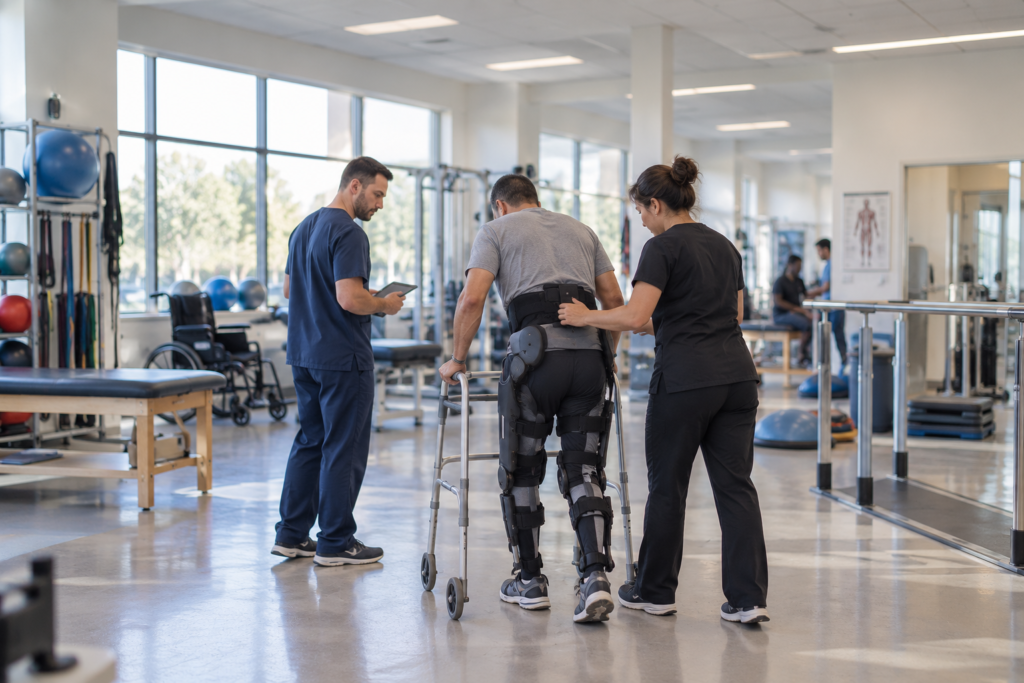
A spinal cord injury can change movement, sensation, strength, and other body functions below the level of the injury. In a California personal injury case, the legal issue is not simply whether a spinal cord injury exists. The claim must connect the injury to another person or entity’s legally responsible conduct and document the medical, financial, and long-term consequences.
Spinal cord injuries can follow vehicle collisions, falls, construction incidents, defective products, and other traumatic events. Some injuries produce immediate and obvious loss of function. Others require imaging, neurological examination, surgery, rehabilitation, and time before the long-term outlook becomes clear. That makes early medical documentation and careful damages analysis especially important.
Spinal Cord Injury Is a Medical Diagnosis, Not a Legal Label
The National Institute of Neurological Disorders and Stroke describes spinal cord injury as damage to the spinal cord that can cause temporary or permanent changes in feeling, movement, strength, and body functions below the injury level. The effects depend on where the spinal cord is damaged and how much damage occurred.
A legal claim should not overstate the diagnosis. Neck pain, back pain, a herniated disc, or a vertebral fracture is not automatically a spinal cord injury. The medical records, imaging, neurological findings, treatment, and provider opinions should establish what injury actually occurred.
Immediate Medical Attention Can Be Critical After Serious Trauma
Potential spinal cord trauma can be an emergency. Federal medical guidance emphasizes prompt evaluation and spinal stabilization when an injury is suspected. Symptoms can include severe pain or pressure in the neck or back, tingling or loss of sensation, weakness, difficulty walking, loss of body control, or breathing problems, but the presentation can vary.
Medical decisions belong to qualified health professionals. From a legal perspective, contemporaneous records can also establish the timing of symptoms, the mechanism of injury, initial neurological findings, and the course of treatment. Gaps or inconsistencies later require explanation, which is one reason accurate early documentation matters.
Liability Depends on How the Injury Happened
A spinal cord injury can arise from many different liability scenarios. A negligent driver may cause a high-energy crash. A dangerous property condition can lead to a severe fall. A construction worker may be injured by a third party on a multi-employer site. A defective product may fail during foreseeable use.
The legal analysis follows the mechanism of injury. A motor-vehicle case may require collision evidence and insurance analysis. A premises claim may require proof about property control and notice of a hazard. A construction case can involve workers’ compensation plus a separate third-party claim. The firm’s refreshed article on construction accidents and personal injury explains why those systems should not be treated as interchangeable.
Defective Products Can Also Cause Catastrophic Injury
Some spinal injuries arise when a product, machine, component, tool, or safety device fails. In those cases, preserving the product and identifying the defect can be as important as preserving medical evidence. The planned Batch 8 article on defective products and California product liability explains the difference between manufacturing, design, and warning defects.
A product-related spinal injury should not be assumed simply because equipment was involved. The evidence must connect a legally recognized defect to the accident and the resulting medical harm.
Future Care Can Be a Major Part of the Damages Analysis
Serious spinal cord injuries may involve surgery, hospitalization, rehabilitation, physical or occupational therapy, mobility equipment, medications, attendant care, home or vehicle modifications, and later medical complications. The exact needs vary substantially by injury level, completeness, recovery, age, and individual circumstances.
A damages claim should be based on evidence rather than a generic lifetime-cost estimate. Treating physicians, rehabilitation records, life-care planning, vocational evidence, and other qualified expert analysis may be needed to identify reasonably expected future needs and their cost.
Lost Income and Earning Capacity Are Not the Same Thing
Lost wages generally concern income already missed because of the injury. Lost earning capacity addresses the ability to earn income in the future. A person with a serious spinal injury may return to the same work, return with restrictions, move into different work, or become unable to perform previous job duties.
Employment records, tax documents, wage history, education, work experience, medical restrictions, vocational evidence, and the person’s likely career path can all become relevant. The goal is to document the actual economic impact rather than assume that every spinal injury produces the same employment outcome.
Non-Economic Harm Can Be Significant
California personal injury damages can also include non-economic harm caused by the injury, such as physical pain, mental suffering, inconvenience, emotional distress, and loss of enjoyment of life when supported by the evidence. A spinal cord injury can affect independence, sleep, mobility, family roles, recreation, and daily activities in ways that are not captured by medical bills alone.
Good documentation does not require dramatization. Treatment notes, testimony from the injured person and people who know them, photographs, mobility records, and evidence of changed activities can help show how life actually changed after the injury.
Spinal Cord Injury Claims in West Covina and Los Angeles County
For a serious spinal injury in West Covina, the San Gabriel Valley, or elsewhere in Los Angeles County, the claim should be organized around liability, medical causation, future needs, insurance, and damages. The firm’s Personal Injury page provides broader information about California injury claims.
These cases can become document-heavy because the medical and financial effects may continue for years. Preserving the accident evidence while the medical picture develops can help ensure that liability is not lost while everyone is understandably focused on treatment and rehabilitation.
