


California Pedestrian Car Accidents: Fault and Legal Implications
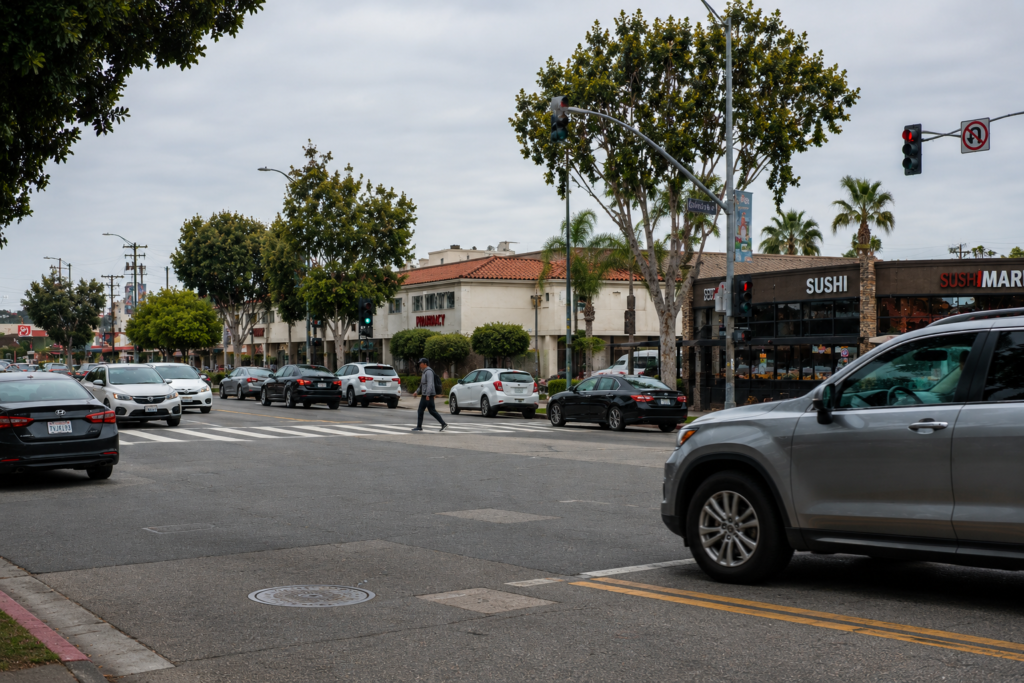
A collision between a vehicle and a pedestrian can raise several legal questions at once. California traffic law determines who had the right-of-way, negligence law asks whether a driver or pedestrian failed to use reasonable care, and comparative fault rules can divide responsibility when more than one person’s conduct contributed to the crash.
Those questions matter because pedestrian accidents often produce serious injuries, but severe harm by itself does not establish who was legally responsible. A strong claim still depends on evidence showing how the collision happened, which traffic rules applied, and how the injuries were connected to the impact.
Drivers Must Yield to Pedestrians in Crosswalks
California Vehicle Code section 21950 requires a driver to yield the right-of-way to a pedestrian crossing the roadway within a marked crosswalk or within an unmarked crosswalk at an intersection. Drivers approaching a pedestrian in that situation must exercise due care and reduce speed or take other action needed to protect the pedestrian.
That rule does not mean a pedestrian can enter a roadway without regard for traffic. The same statute states that a pedestrian may not suddenly leave a curb or other place of safety and walk or run into the path of a vehicle that is so close as to create an immediate hazard. Both sides of the encounter therefore remain relevant to the liability analysis.
Pedestrians Outside a Crosswalk Have Different Duties
California law also addresses pedestrians who cross outside a marked or unmarked crosswalk. Vehicle Code section 21954 generally requires a pedestrian crossing somewhere other than a crosswalk to yield the right-of-way to vehicles that are close enough to create an immediate hazard.
Even then, a driver is not relieved of the duty to use reasonable care. A driver who sees a pedestrian in the roadway may still need to slow, brake, steer safely, or take other reasonable action to avoid a collision. Liability therefore cannot be decided from the location of the pedestrian alone.
Fault Depends on What Each Person Did Before Impact
Common liability questions include whether the driver was speeding, distracted, impaired, turning without yielding, entering a crosswalk against a signal, or failing to react after the pedestrian became visible. The pedestrian’s conduct may also be examined, including where the crossing began, whether a traffic signal applied, whether visibility was obstructed, and whether the pedestrian moved into traffic unexpectedly.
Intersections can be especially fact-sensitive. A left-turning or right-turning driver may be watching vehicle traffic and fail to notice a person already entering the crosswalk. At night, lighting, clothing, headlight use, and sight distance can become disputed. In parking lots or driveways, the analysis may depend less on formal crosswalk rules and more on whether each person acted reasonably under the circumstances.
California Comparative Fault Can Divide Responsibility
California uses comparative fault. If a pedestrian and a driver both contributed to the accident, a jury can assign a percentage of responsibility to each. An injured pedestrian is not automatically barred from recovery simply because the pedestrian was also negligent, but the amount recoverable can be reduced by that person’s share of fault.
For example, a pedestrian might be found partly responsible for crossing outside a crosswalk while a driver is also found responsible for speeding or failing to react to a visible hazard. The percentages depend on the evidence and should not be assumed from a single fact such as where the pedestrian was standing.
Evidence Can Be More Important Than Conflicting Statements
Pedestrian crashes frequently produce different accounts of what happened. The driver may say the pedestrian appeared suddenly. The pedestrian may say the driver failed to yield. Witnesses may have seen only part of the sequence.
Useful evidence can include photographs of the roadway, traffic signals and crosswalks, vehicle damage, debris, skid marks, surveillance video, dashcam footage, witness information, police reports, and available electronic or vehicle records. The timing of the investigation matters because nearby businesses and homes may overwrite video, and witnesses can become harder to locate.
Injury Evidence Is a Separate Part of the Claim
Proving fault is only one part of a pedestrian injury case. The claimant must also establish the harm caused by the collision. Depending on the facts, damages can include medical expenses, future medical care, lost earnings, reduced earning capacity, and non-economic harm such as pain, emotional distress, physical impairment, and loss of enjoyment of life.
Pedestrian injuries may involve fractures, head injuries, spinal injuries, internal trauma, lacerations, or other conditions that require continuing care. Medical records, bills, employment documentation, photographs, and evidence of day-to-day limitations can help show the effect of the injury over time.
Hit-and-Run Accidents Add an Insurance Question
When the driver leaves the scene and cannot immediately be identified, the investigation can include efforts to locate video, witnesses, vehicle descriptions, or license-plate information. Insurance coverage may also become important. Depending on the policy and facts, uninsured motorist coverage can potentially apply to certain hit-and-run situations.
That coverage question should be reviewed under the actual policy rather than assumed. Notice requirements, evidence requirements, and the circumstances of the collision can affect whether coverage is available.
Pedestrian Accident Claims in West Covina and Los Angeles County
People walking in West Covina, elsewhere in the San Gabriel Valley, and across Los Angeles County share roads with heavy vehicle traffic, turning movements, parking-lot traffic, buses, rideshare vehicles, and freeway-adjacent streets. The legal rules are statewide, but the evidence is always specific to the location and the sequence of events.
The firm’s pedestrian accident practice page explains how these claims are handled. The broader personal injury page provides additional information about California injury claims and damages.
A pedestrian collision should be evaluated from both directions: what the driver was required to do, what the pedestrian was required to do, and what the available evidence shows actually happened. That approach is more reliable than assuming fault based only on the fact that a pedestrian was struck.
