


The Role of Accident Reconstruction Experts in Legal Cases
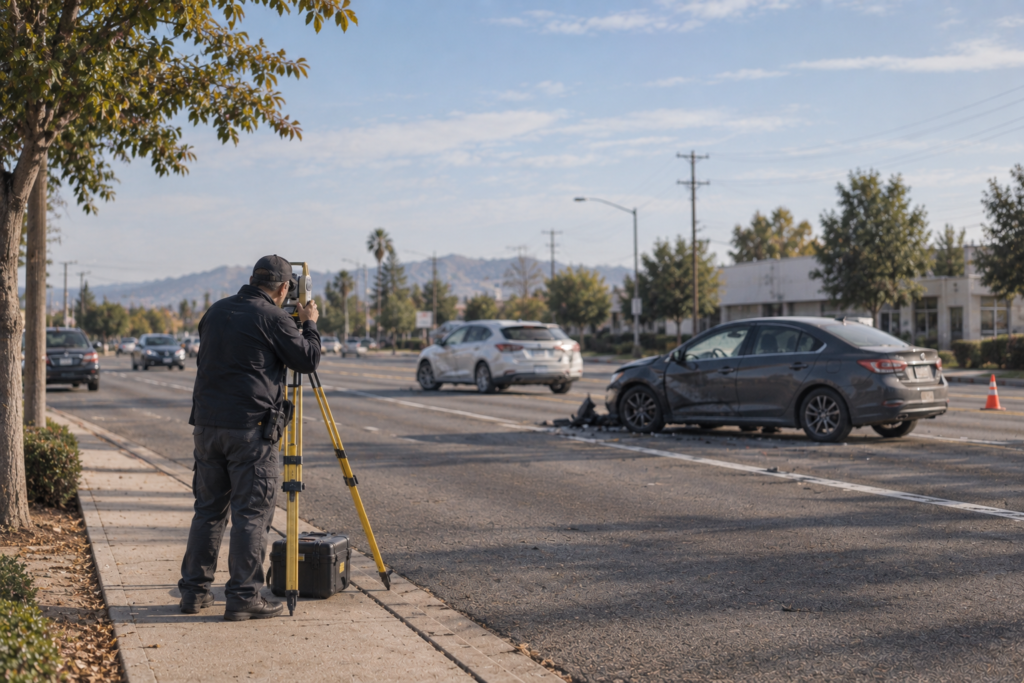
An accident reconstruction expert uses physical evidence, measurements, photographs, vehicle data, engineering principles, and other information to analyze how a collision or other event occurred. In a personal injury case, that work can help explain speed, movement, impact location, visibility, braking, vehicle paths, or whether a particular version of events is consistent with the evidence.
Not every accident needs a reconstruction expert. Many claims can be evaluated through photographs, witness statements, police documentation, medical records, video, and ordinary fact investigation. Reconstruction becomes more useful when the mechanism of the accident is disputed, technically complex, or difficult to understand from the raw evidence alone.
Reconstruction Starts With Preserving the Evidence
An expert cannot analyze evidence that no longer exists. Depending on the case, important material may include scene photographs, roadway measurements, surveillance or dash-camera footage, vehicle damage, tire marks, debris, traffic-signal information, event data recorder information, electronic logging records, inspection records, or damaged equipment.
Some evidence disappears quickly. Vehicles are repaired or salvaged. Road debris is cleared. Video systems overwrite older footage. Skid or tire marks fade. Construction sites and property conditions change. Early preservation can therefore matter before anyone decides whether expert testimony will ultimately be necessary.
Experts Can Analyze Vehicle Movement and Impact Dynamics
In motor-vehicle cases, reconstruction may involve examining where the vehicles made contact, the direction and severity of damage, post-impact movement, roadway geometry, braking evidence, available electronic data, and other physical clues.
The analysis may help evaluate questions such as whether a vehicle entered an intersection before another, whether a claimed speed is consistent with the physical evidence, where impact occurred within the roadway, or whether a driver had enough distance and time to react.
Those opinions should not replace evidence. A sound reconstruction connects technical methods to the actual facts of the case and explains any assumptions used in the analysis.
Accident Reconstruction Is Not Limited to Car Crashes
Reconstruction principles can also be useful in truck crashes, motorcycle collisions, pedestrian impacts, construction incidents, equipment failures, and other cases where forces, movement, visibility, timing, or physical conditions are disputed.
A commercial truck case may involve different records from a passenger-car collision. Driver logs, inspection records, carrier documents, onboard systems, trailer evidence, and maintenance history can become relevant. The refreshed article on what makes a good semi-truck accident lawyer discusses why trucking cases often require a broader evidence review than an ordinary two-car crash.
Expert Testimony Must Be Based on Specialized Knowledge
California Evidence Code section 801 permits expert opinion testimony when the subject is sufficiently beyond common experience that expert assistance would help the trier of fact, and when the opinion is based on matter reasonably relied upon by experts in the field.
That does not mean an expert can simply announce who should win. The useful part of reconstruction is the technical analysis: measurements, calculations, engineering or scientific principles, vehicle dynamics, human-factors issues within the expert’s field, and explanation of how the evidence supports or contradicts a particular scenario.
Courts can examine whether an expert is qualified and whether the opinion has an adequate foundation. The credibility of the opinion may also be challenged through cross-examination and competing expert testimony.
Reconstruction Can Help When Witness Accounts Conflict
People involved in an accident may sincerely remember the event differently. A collision happens quickly, and perception can be affected by lighting, obstructions, stress, viewing angle, speed, or divided attention.
Physical evidence can sometimes provide an independent way to test those accounts. For example, vehicle resting positions, damage patterns, roadway marks, video timestamps, and electronic data may support one description of the sequence more strongly than another.
The article on how to prove fault after a Los Angeles car accident explains how photographs, witnesses, reports, video, vehicle information, and other evidence can work together in the liability analysis.
Electronic Vehicle Data Can Be Useful but Has Limits
Some vehicles store event data that may include information about speed, braking, throttle position, seat-belt status, or other parameters for a short period around a qualifying event. The available information depends on the vehicle, system, crash, and method of retrieval.
Electronic data should be interpreted in context. It may not answer every question, and not every vehicle records the same information. An expert may need to compare it with scene evidence, photographs, vehicle damage, witness accounts, and manufacturer-specific information before drawing conclusions.
An Expert Does Not Decide Legal Fault
Accident reconstruction and legal liability are related but different. An expert may offer an opinion about technical issues such as vehicle movement or collision dynamics. Legal fault ultimately depends on the applicable duties, conduct of the parties, causation, and the fact finder’s evaluation of the evidence.
California comparative-fault principles also allow responsibility to be divided when more than one person contributed to an accident. A reconstruction may help clarify what happened without necessarily proving that only one person was responsible.
When Is Reconstruction Worth the Cost?
Expert work can be expensive, so the decision should fit the needs and value of the case. Reconstruction may be more justified when injuries are severe, liability is seriously disputed, commercial vehicles or complex machinery are involved, crucial physical evidence exists, or competing accounts cannot be resolved through simpler investigation.
In a straightforward claim with clear video and undisputed fault, a full reconstruction may add little. Effective case preparation means using the level of investigation the facts actually require rather than adding experts automatically.
Accident Evidence in West Covina and Los Angeles County Cases
For accidents in West Covina, the San Gabriel Valley, and Los Angeles County, preserving evidence early can keep more investigative options available. Even when reconstruction is never needed, clear photographs, video, witness information, vehicle records, and scene documentation can make the liability analysis more reliable.
If technical questions later become important, that preserved evidence can give a qualified expert something meaningful to analyze instead of forcing the case to depend entirely on memory.
