Understanding Brain Injuries After an Accident

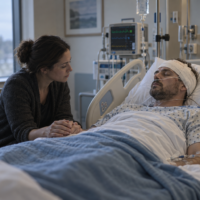
A brain injury can range from a mild concussion to a life-changing traumatic brain injury that affects movement, speech, memory, behavior, concentration, or independence. The seriousness of the legal claim depends not on the label alone, but on the medical evidence, how the injury occurred, what limitations remain, and how the condition affects the person’s work and daily life.
Brain injuries can follow car, truck, motorcycle, bicycle, or pedestrian collisions, falls, construction incidents, and other traumatic events. A person does not necessarily need a direct blow to the head for a traumatic brain injury to occur. The CDC explains that a hit to the body can also cause the head and brain to move rapidly back and forth.
Not Every Brain Injury Looks Dramatic at First
A severe brain injury may involve obvious emergency symptoms, but mild traumatic brain injury can be harder to recognize. According to the CDC, symptoms can affect how a person feels, thinks, acts, and sleeps. Some symptoms appear immediately, while others may develop hours or days later.
Possible symptoms can include headache, dizziness, balance problems, nausea, sensitivity to light or noise, fatigue, vision problems, difficulty concentrating, memory problems, irritability, emotional changes, and sleep disruption. Symptoms vary from person to person, and they can overlap with other conditions. Diagnosis belongs to qualified healthcare providers.
The article on what you need to know about traumatic brain injuries provides a broader overview of TBI evidence and injury claims.
Know the Warning Signs That Require Emergency Attention
Some symptoms after head trauma can indicate an emergency. The CDC advises immediate emergency medical care for danger signs such as a worsening headache that does not go away, repeated vomiting, seizures, weakness or numbness, decreased coordination, slurred speech, unusual behavior, increasing confusion or agitation, unequal pupil size, inability to recognize people or places, or loss of consciousness with difficulty waking.
This article cannot determine whether a particular symptom is an emergency. When serious warning signs are present, medical care should take priority over documenting a legal claim.
Medical Documentation Can Develop Over Time
A brain-injury claim may involve emergency records, neurological examinations, imaging, cognitive testing, rehabilitation records, therapy notes, medication history, specialist evaluations, work restrictions, and follow-up care. Not every TBI appears on ordinary imaging, and the absence of a dramatic scan finding does not by itself answer every clinical question.
At the same time, a legal claim cannot rely only on a person saying that something feels different. The medical history and functional evidence should help connect the accident to the symptoms and show how those symptoms developed.
The importance of prompt medical treatment after an accident is especially relevant when head-injury symptoms emerge after the person has already left the scene.
Family Members and Coworkers May Notice Changes First
Some effects of a brain injury are easier for other people to observe than for the injured person to recognize. A spouse may notice increased irritability. A coworker may see that tasks take longer. A family member may notice memory problems, unusual fatigue, difficulty following conversations, or changes in sleep and routine.
Those observations do not replace medical evidence, but they can help describe functional changes over time. In a serious case, testimony from people who knew the person before and after the accident can provide context that a short medical appointment cannot capture.
Brain Injuries Can Affect Employment in Different Ways
A person with a brain injury may return to work quickly, need temporary accommodations, reduce hours, change responsibilities, or become unable to perform previous work. Cognitive demands matter. A physical job and a job requiring sustained attention, rapid decision-making, memory, or complex communication may be affected differently.
Economic damages can therefore include more than wages missed immediately after the accident. In severe cases, future earning capacity may become an issue if reliable evidence shows that lasting impairments reduce the person’s ability to earn income.
Non-Economic Harm Can Be Significant
A brain injury can affect independence, relationships, recreation, sleep, confidence, and ordinary daily routines. California personal injury law recognizes non-economic losses such as physical pain, mental suffering, emotional distress, inconvenience, and loss of enjoyment of life when supported by the evidence.
The distinction between measurable financial loss and non-monetary harm is explained in the article on special and general damages in a personal injury case.
Liability Still Has to Be Proven
A serious diagnosis does not itself establish that another person is legally responsible. The claim still requires evidence of fault and causation. A brain injury from a rear-end crash raises different liability questions from a fall on dangerous property, a defective product, or a construction incident.
Evidence may include photographs, witness information, video, accident reports, vehicle records, property records, expert analysis, and medical evidence connecting the trauma to the injury.
Brain Injury Claims Can Require Long-Term Evidence
Recovery from brain injury is highly individual. Some people improve substantially within a relatively short period. Others experience symptoms for months or longer. Severe injuries may require rehabilitation, assistance with daily activities, vocational changes, or long-term medical care.
Future-damages claims should be based on evidence rather than assumptions. Medical providers, rehabilitation specialists, vocational professionals, economists, life-care planners, and other qualified experts may become relevant depending on the severity and disputed issues.
Brain Injury Claims in West Covina and Los Angeles County
For an injured person in West Covina, the San Gabriel Valley, or elsewhere in Los Angeles County, a brain-injury claim should be built around the actual medical course and functional impact. That means preserving medical records, documenting work changes, following appropriate care, identifying witnesses, and preserving evidence of how the accident occurred.
Brain injuries should not be minimized simply because they are not always visible. They also should not be exaggerated. The strongest legal presentation is the one that accurately shows what happened, what qualified providers found, and how the injury changed the person’s life.
[START_FAQ]
Q: Can you have a traumatic brain injury without losing consciousness?
A: Yes. Loss of consciousness can occur in some brain injuries, but it is not required for every mild TBI or concussion. A healthcare provider should evaluate symptoms and the circumstances of the injury.
—
Q: Can concussion symptoms appear after the accident?
A: Yes. The CDC notes that some mild TBI symptoms may appear immediately while others may develop hours or days later.
—
Q: Does a normal scan mean there is no brain injury?
A: Not necessarily. Imaging is only one part of medical evaluation, and not every mild TBI is resolved by a single scan result. Diagnosis and treatment decisions should be made by qualified healthcare providers.
—
Q: What evidence can help show how a brain injury changed daily life?
A: Medical records, work records, rehabilitation notes, testimony from the injured person, observations from family or coworkers, activity changes, and other reliable evidence can help document functional impact.
—
Q: Does The Law Firm of Oscar A. Ischiu review accident claims involving brain injuries?
A: Yes. The firm can review personal injury matters involving brain injuries, liability, medical evidence, insurance, lost income, future needs, and day-to-day impact for clients in West Covina, the San Gabriel Valley, and Los Angeles County.
[END_FAQ]

