What to Do If You’re Injured While on Someone Else’s Property

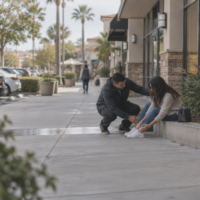
If you are injured on someone else’s property, the first priority is your health. Get medical attention when needed, report what happened, and preserve evidence of the condition that caused the injury. A premises liability claim is not created simply because an accident happened on another person’s property. The legal question is whether the person or business that owned, occupied, leased, or controlled the property failed to use reasonable care and whether that failure contributed to the injury.
That distinction matters after a fall in a store, an injury at an apartment building, a broken stair, an unsafe walkway, poor lighting, or another dangerous condition. The condition itself, who controlled the area, how long the hazard existed, what warnings were given, and what the injured person could reasonably see may all become important.
Get Medical Care and Describe How the Injury Happened
Seek appropriate medical care based on the injury. If the situation is an emergency, call 911 or go to an emergency department. For less urgent injuries, timely evaluation can still be important because pain, swelling, concussion symptoms, or limitations in movement may become clearer after the initial event.
When speaking with medical providers, describe the mechanism of injury accurately. A medical record should reflect what happened without exaggeration. Keep copies of discharge instructions, referrals, imaging reports, bills, and other treatment records. Those documents can later help connect the event to the condition being treated.
Report the Incident to the Property Owner or Manager
If you are able, notify the person responsible for the property. At a business, that may be a manager or supervisor. At an apartment complex, it may be a property manager or landlord. Ask whether an incident report will be created and request a copy if one is available.
Keep your description factual. You do not need to guess how long a spill was present, why a stair broke, or who caused a hazard. If you did not see the condition before the accident, say so. Early statements can become important later, so accuracy matters more than trying to assign blame at the scene.
Photograph the Hazard Before It Changes
Property conditions can disappear quickly. A spill may be cleaned, merchandise moved, a mat replaced, lighting repaired, or a broken surface patched. If it is safe to do so, photograph or record the exact area where the injury occurred. Take wider images that show the surrounding layout as well as closer views of the condition itself.
Useful evidence may include the floor surface, stairs, railings, warning signs, lighting, debris, elevation changes, leaks, damaged pavement, or other features connected to the incident. Photograph your footwear and visible injuries as well. If witnesses saw the accident or the condition beforehand, obtain their contact information.
Premises Liability Depends on Negligence, Not Ownership Alone
California’s civil jury instructions describe a premises liability claim in terms of control, negligence, harm, and causation. A person or entity may be relevant because it owned, leased, occupied, or controlled the property. The plaintiff still must establish negligent use or maintenance of the property, resulting harm, and a causal connection between the negligence and the injury.
That means ownership alone does not answer the case. A shopping center, tenant business, maintenance contractor, property manager, landlord, or another party may control different parts of the property. Identifying who was responsible for the area where the incident occurred can be as important as identifying the hazard.
What the Property Owner Knew Can Matter
Many premises cases turn on notice. Evidence may show that the responsible party created the condition, actually knew about it, or should have discovered it through reasonable inspection and maintenance. The analysis depends on the type of property and the facts.
That is why surveillance footage, inspection logs, maintenance records, prior complaints, employee observations, work orders, and witness statements can matter. An injured person may not have access to those records immediately, which is one reason early preservation requests can become important in a serious case.
Shared Fault Does Not Automatically End a Claim
A property owner or insurer may argue that the injured person was distracted, ignored a warning, wore inappropriate footwear, or failed to see an obvious condition. California comparative fault principles can reduce damages when an injured person shares responsibility, but partial fault does not automatically eliminate a negligence claim.
The actual evidence matters. Photographs, lighting, sight lines, warnings, the reason the person was on the property, and how the hazard appeared from the direction of travel may all affect the analysis.
Keep Records of the Losses Caused by the Injury
Medical bills are only one part of documenting an injury. Keep records of missed work, reduced hours, transportation to appointments, out-of-pocket costs, and changes in daily activities. More serious injuries may require evidence concerning future treatment, reduced earning ability, or long-term limitations.
Damages are evidence-driven. A claim should not be valued from a generic online settlement chart or a promise that a certain injury is “worth” a fixed amount.
Premises Liability Help in West Covina and the San Gabriel Valley
For an injury on someone else’s property in West Covina, the San Gabriel Valley, or elsewhere in Los Angeles County, a useful legal review starts with the location, the hazard, who controlled the area, available photographs or video, witness information, and the medical record. The firm’s Personal Injury page provides additional information about California injury claims.
Acting early does not mean rushing into a lawsuit. It means protecting the evidence needed to determine whether the accident was simply unfortunate or whether an unsafe property condition and a failure to use reasonable care contributed to the harm.
[START_FAQ]
Q: What should I do first after being injured on someone else’s property?
A: Get necessary medical care, report the incident to the property owner or manager, photograph the condition that caused the injury if it is safe to do so, and collect witness information. Preserve any incident report, receipts, medical records, and communications related to the event.
—
Q: Is a property owner automatically responsible if I get hurt on the property?
A: No. A premises liability claim generally requires evidence that the responsible person or entity was negligent in the use or maintenance of property under its control and that the negligence was a substantial factor in causing the injury.
—
Q: What evidence can help prove a dangerous property condition?
A: Useful evidence can include photographs, surveillance video, witness statements, inspection or maintenance records, prior complaints, incident reports, work orders, warning signs, and evidence showing how long the condition may have existed.
—
Q: Can I still have a claim if I was partly at fault for the accident?
A: Potentially. California comparative fault principles allow responsibility to be divided among the people or entities whose conduct contributed to the injury. Any recovery may be reduced by the percentage of fault assigned to the injured person.
—
Q: Does The Law Firm of Oscar A. Ischiu handle premises liability injury cases?
A: Yes. The firm can review slip and fall and other premises liability matters involving unsafe property conditions in West Covina, the San Gabriel Valley, and Los Angeles County, including the available evidence, medical documentation, insurance, and potential responsible parties.
[END_FAQ]

