


Dog Bite Personal Injury: Understanding Your Legal Options
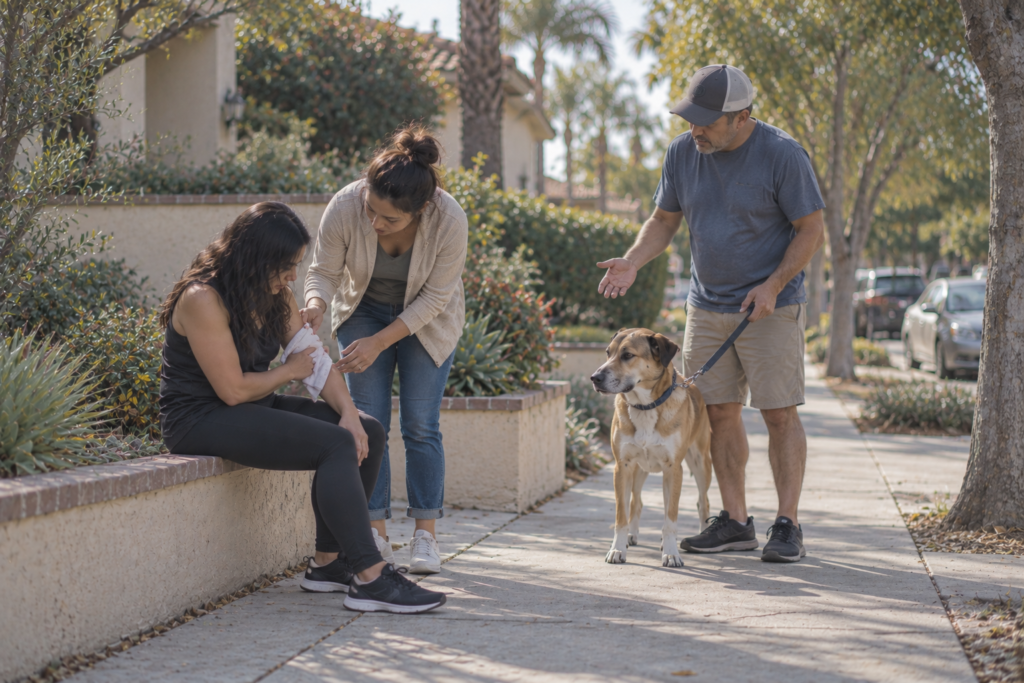
California dog bite law can make a dog owner financially responsible for injuries even when the dog had never bitten anyone before. Under Civil Code section 3342, an owner is generally liable when the dog bites a person who is in a public place or lawfully on private property. The statute does not require the injured person to prove that the owner already knew the dog was dangerous.
That does not mean every animal-related injury is automatically the same case. The location of the bite, whether the person was lawfully present, who owned the dog, how the incident happened, and whether the injury came from an actual bite or another form of attack can affect the legal analysis. The first steps should focus on medical care, identifying the dog and owner, and preserving evidence before memories and physical conditions change.
California Does Not Use a Traditional One-Bite Rule for Dog Bites
Some states require proof that an owner knew or should have known a dog was dangerous before liability can attach. California’s dog bite statute is different. Civil Code section 3342 generally imposes liability on the owner for damages suffered by a person bitten in a public place or while lawfully on private property, regardless of the dog’s prior viciousness or the owner’s knowledge of it.
The distinction matters because a victim may not need evidence of an earlier bite to pursue a statutory dog bite claim. Prior incidents can still matter for other issues, but the absence of a known bite history does not by itself eliminate a California claim. The statute also contains specific exceptions, including provisions involving certain police or military dog uses, so the facts still need to be reviewed rather than reduced to a slogan.
Get Medical Attention and Document the Injury
Dog bites can involve puncture wounds, lacerations, infection risk, nerve or tendon damage, scarring, and injuries caused while trying to escape the animal. Medical treatment should be based on the injury and a qualified provider’s recommendations. Keep records of emergency care, follow-up treatment, prescriptions, referrals, photographs of the healing process, and any work restrictions.
Medical bills often arrive long before an injury claim is resolved. The firm’s article on medical bills after a personal injury explains why treatment costs, insurance payments, reimbursement issues, and legal damages should be tracked separately instead of assuming the dog owner’s insurer will immediately pay each bill.
Identify the Dog, Owner, and Available Witnesses
If it can be done safely, obtain the dog owner’s name, address, contact information, and any available insurance information. Record the location and time of the incident. Witness names and contact information can be valuable, especially when there is a dispute about how the encounter happened or whether the injured person was lawfully present.
Photographs can document more than the wound. They may show the property layout, gate or fence condition, leash or restraint, warning signs if any, torn clothing, blood on clothing, and the area where the bite occurred. Avoid approaching the dog again simply to obtain a photograph. Safety comes first.
Reports and Animal-Control Records May Matter
A report to the appropriate local animal-control or public-health authority can create a record of the incident and may help identify the animal, vaccination information, ownership, or prior complaints. The specific reporting or quarantine process can vary by local agency and circumstances, so an injured person should follow medical and local public-health guidance rather than relying on informal advice from the owner.
Keep copies of any report numbers, notices, emails, text messages, or other communications concerning the dog. Do not alter screenshots or delete communications simply because they seem unimportant at first. A later dispute may turn on details that were not obvious immediately after the attack.
Insurance Coverage Can Be an Important Practical Issue
Dog bite claims are often handled through liability insurance when applicable, including some homeowners or renters policies. Coverage is not automatic. Policy terms, exclusions, ownership questions, the location of the incident, and prior claim history can affect whether an insurer accepts the claim.
An insurer may also ask for a recorded statement or broad medical authorization. Before signing documents or making detailed statements about fault, prior medical conditions, or the long-term effects of the injury, it can be useful to understand what information is actually being requested and why.
What Damages May Be Part of a Dog Bite Claim?
Depending on the facts, a dog bite injury claim may include reasonable medical expenses, future medical needs supported by evidence, lost income, reduced earning ability, physical pain, emotional distress, scarring, and other harm caused by the incident. The existence and value of any category of damages depend on documentation and causation, not simply on the fact that a bite occurred.
Permanent scarring can be particularly important when the bite involves the face, hands, arms, or another visible area. Good documentation includes dated photographs over time and medical records that accurately describe treatment and prognosis. A claim should not assume a scar is permanent before the medical evidence supports that conclusion.
Dog Bite Claims in West Covina and Los Angeles County
For a dog bite in West Covina, the San Gabriel Valley, or elsewhere in Los Angeles County, early fact gathering can help clarify ownership, lawful presence, insurance, medical harm, and available evidence. The firm’s Personal Injury page explains the broader framework for injury claims involving another person’s legal responsibility.
A dog bite case should be evaluated on its actual facts. California’s statute can be favorable to a person who was lawfully present, but liability, insurance, causation, and damages still require evidence. Preserving that evidence early is usually more useful than trying to reconstruct it months later.
