


How to Handle Car Accidents Involving Cyclists in California
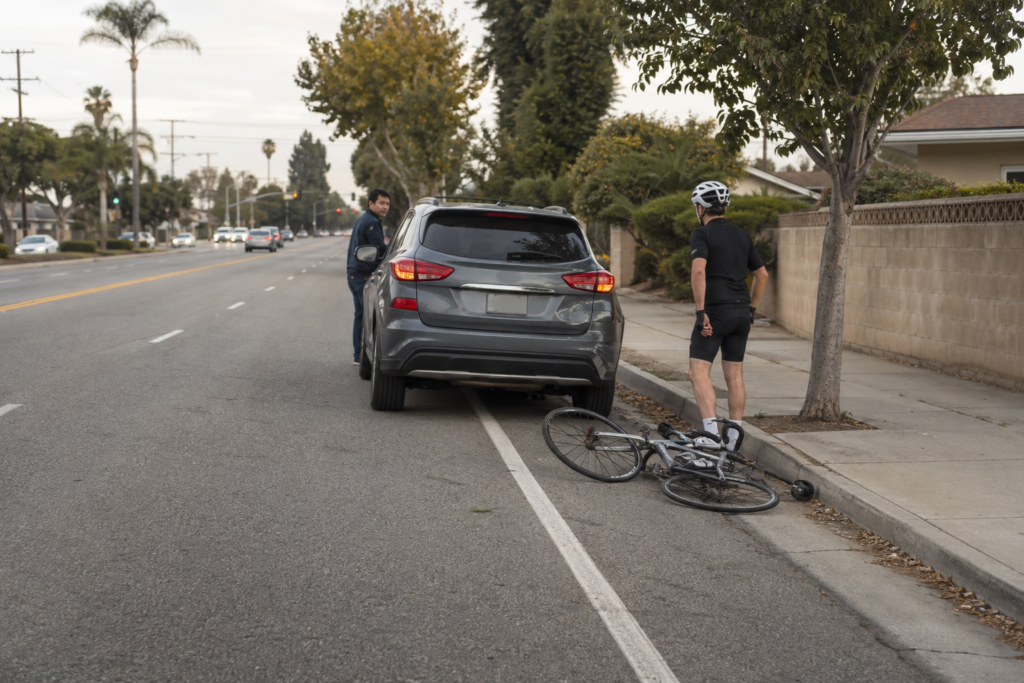
A car accident involving a cyclist can become a serious injury case even when the impact occurs at relatively low speed. A person on a bicycle has little physical protection, while the driver may be dealing with traffic, visibility, lane position, turning movements, and questions about who had the right-of-way. What happens in the first hours after the collision can affect both health and the evidence available later.
California treats bicyclists as roadway users with many of the same rights and duties that apply to drivers. That does not mean every bicycle accident is automatically the motorist’s fault. Liability depends on how the collision happened, which traffic rules applied, and whether either person failed to use reasonable care.
Start With Safety and Medical Attention
After a collision, the first priority is safety. If possible, move out of the path of traffic without disturbing more of the scene than necessary. Call 911 when there are significant injuries, dangerous traffic conditions, or another emergency. A cyclist who struck the pavement, a vehicle, or another object may have injuries that are not immediately obvious.
Head injuries deserve particular caution. A helmet can reduce risk, but it cannot prevent every concussion or traumatic brain injury. Pain in the neck, back, shoulder, hip, wrist, or knee may also become more noticeable after the initial shock wears off. Medical evaluation creates a record of the symptoms and, more importantly, allows appropriate treatment to begin.
Document the Road, Bicycle, Vehicle and Traffic Controls
If it can be done safely, photographs and video can preserve details that may disappear quickly. Useful images can include the bicycle’s position and damage, the vehicle, debris, skid or tire marks, lane lines, bike-lane markings, traffic signals, stop signs, lighting, parked vehicles, sight obstructions, and the overall approach to the collision point.
Get the driver’s name, contact information, license information and insurance details. Identify witnesses before they leave. If the crash occurred near a business, apartment building, intersection camera, doorbell camera, or vehicle with a dashcam, note that immediately. Video may be overwritten, so locating potential sources early can matter.
California Gives Bicyclists Roadway Rights and Responsibilities
California Vehicle Code section 21200 generally provides that a person riding a bicycle on a highway has the rights and is subject to the provisions applicable to a driver, except rules that by their nature do not apply. Other bicycle rules address lane position, equipment, signals, nighttime visibility and specific roadway situations.
For a civil injury claim, the important question is usually not whether one side can point to a single traffic rule. The broader issue is whether the driver, cyclist, or another party acted unreasonably under the circumstances. A turning driver may fail to see a cyclist traveling through an intersection. A driver may open a door into a cyclist’s path. A cyclist may enter traffic unexpectedly or fail to obey a control signal. Each scenario requires its own evidence.
Shared Fault Does Not Automatically End a California Claim
California follows comparative-fault principles. If a cyclist is partly responsible for causing the collision, that does not necessarily eliminate a claim against a negligent driver. Instead, responsibility can be divided and damages reduced according to the cyclist’s share of fault.
This is one reason to avoid making assumptions at the scene. A person may apologize out of stress or confusion without actually understanding the traffic sequence. Insurance adjusters may also focus on one fact, such as lane position or dark clothing, while overlooking speed, visibility, a turn, a failure to yield, or other evidence.
Insurance Issues Can Depend on Who Caused the Crash
When a negligent driver injures a cyclist, the driver’s liability insurance may be a source of compensation. Depending on the facts and available coverage, other insurance may also become relevant. Hit-and-run crashes and collisions involving uninsured or underinsured drivers can raise additional coverage questions.
An injury claim may include reasonable medical expenses, future care supported by medical evidence, lost earnings, diminished earning capacity, and non-economic harm such as pain, physical limitations, and loss of enjoyment of life. The value of a claim depends on proof, not simply the fact that a bicycle was involved.
Preserve the Bicycle and Other Physical Evidence
A damaged bicycle can tell part of the story. Before repairing or disposing of it, consider whether the condition of the frame, fork, wheel, handlebars, pedals, lights, helmet, or other equipment may be important. The same is true of torn clothing, a damaged phone, helmet marks, or other physical items.
Keeping a simple file can also help. Save medical records and bills, prescriptions, photographs of visible injuries, wage-loss documents, repair estimates, insurance correspondence, and notes about how symptoms affect ordinary activities. Good documentation makes it easier to connect the accident to the losses being claimed.
When Legal Help May Be Useful
Not every bicycle collision requires a lawsuit, but legal review can be useful when injuries are serious, fault is disputed, the driver left the scene, multiple insurance policies may apply, or the insurer is asking for a recorded statement or broad medical authorization before the facts are clear.
For crashes in West Covina, elsewhere in the San Gabriel Valley, or across Los Angeles County, the firm’s Personal Injury page provides additional information about injury representation. The goal is to identify what actually happened and preserve the evidence before memories fade or records disappear. A bicycle accident case should be built around the road geometry, traffic rules, physical evidence, medical documentation and the conduct of everyone involved.
