


The Legal Rights of Bicyclists Injured in Traffic Accidents
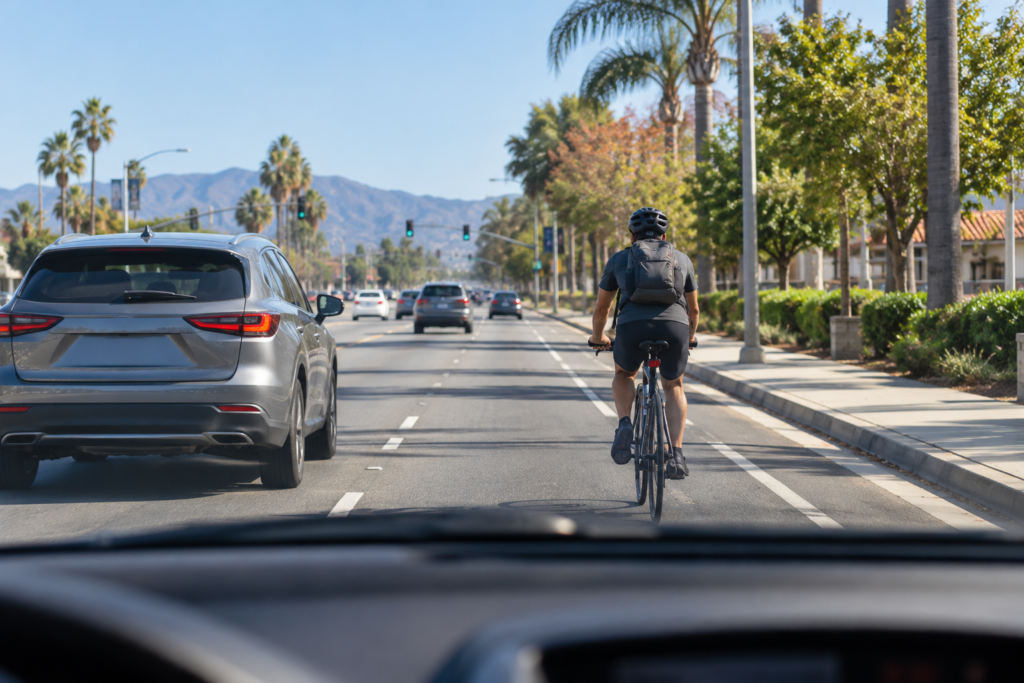
California bicyclists generally have the same roadway rights and responsibilities that apply to drivers, subject to bicycle-specific rules. After a collision, an injured bicyclist can pursue a personal injury claim when another person or entity’s negligence caused the crash. The fact that the injured person was riding a bicycle does not reduce the case to a question of who was physically larger or who had insurance.
Liability depends on the traffic rules, roadway configuration, visibility, turning movements, passing distance, lane position, signals, speed, and the conduct of everyone involved. Because a bicycle collision can leave little physical protection for the rider, early medical care and preservation of scene evidence are especially important.
California Gives Bicyclists Roadway Rights and Duties
Vehicle Code section 21200 provides that a person riding a bicycle on a highway generally has the rights and is subject to the provisions applicable to a vehicle driver, except rules that by their nature do not apply. That means bicyclists are not treated as pedestrians simply because they are more vulnerable than motorists.
At the same time, bicycle-specific rules matter. Vehicle Code section 21202 generally requires a bicyclist traveling slower than normal traffic to ride as close as practicable to the right-hand curb or edge, but it includes important exceptions. A rider may move away from the right side when passing, preparing for a left turn, avoiding unsafe conditions, approaching a place where a right turn is authorized, or when the lane is too narrow for a bicycle and vehicle to travel safely side by side.
Drivers Must Give Bicyclists Safe Passing Distance
California’s Three Feet for Safety Act requires a motorist overtaking a bicycle traveling in the same direction to pass at a safe distance and generally prohibits passing with less than three feet between any part of the vehicle and the bicycle or rider. When another lane traveling in the same direction is available, the driver must make a lane change before passing if doing so is practicable and lawful.
If road or traffic conditions make the three-foot distance impossible, the driver must slow to a reasonable and prudent speed and pass only when doing so would not endanger the bicyclist. Those details can become central when a rider is sideswiped, forced off the roadway, struck by a mirror, or hit during a close pass.
Turning and Intersection Collisions Need Careful Reconstruction
Many bicycle crashes happen at intersections, driveways, parking-lot entrances, and locations where vehicles turn across a bicyclist’s path. A driver may say the bicycle “came out of nowhere,” while the rider may have had the right of way and been plainly visible. The physical evidence can help resolve those competing accounts.
Photographs of lane markings, bike lanes, traffic controls, sight lines, parked vehicles, driveway geometry, debris, vehicle damage, bicycle damage, and final resting positions can be useful. Nearby business or residential cameras may also have captured the approach to the collision, but recordings can be overwritten quickly.
Dooring and Bike-Lane Incidents Can Create Different Evidence Issues
A bicyclist can be injured without a traditional moving-vehicle impact. An opened vehicle door can strike a rider or force the rider into traffic. A vehicle can also enter or block a bicycle lane while turning, parking, or entering or leaving the roadway. The specific Vehicle Code provisions and facts determine whether the motorist acted lawfully and reasonably.
In those cases, photographs showing where the vehicle was stopped, the door position, the bicycle lane, curb, surrounding traffic, and available clearance may be more important than general pictures of the intersection.
Comparative Fault Does Not Automatically Eliminate a Claim
California uses comparative fault. If evidence shows that both the motorist and bicyclist contributed to the collision, responsibility can be divided. An injured bicyclist’s recovery may be reduced by the percentage of fault assigned to that rider rather than automatically eliminated.
That makes accurate traffic-law analysis important. Not every allegation that a rider was “too far left,” “not in the bike lane,” or “hard to see” proves negligence. The roadway, lane width, hazards, lighting, bicycle equipment, direction of travel, and applicable exceptions all need to be considered.
What to Do After a Bicycle Collision
The firm’s article on how to handle car accidents involving cyclists focuses on the immediate steps after a crash. In short, get necessary medical care, report the collision when required, identify drivers and witnesses, photograph the scene and bicycle, preserve damaged equipment and clothing, and keep records of treatment and lost work.
A helmet, bicycle, wheel, light, camera, phone, or damaged clothing can become evidence. Do not discard items simply because they appear unusable. If an insurer or other party wants to inspect or take possession of the bicycle, document its condition first and understand what will happen to it.
Damages Can Extend Beyond the Initial Medical Bill
A serious bicycle collision can cause fractures, head injuries, spinal injuries, shoulder and wrist injuries, road rash, scarring, and other harm. Depending on the evidence, damages may include medical expenses, future treatment, lost income, reduced earning capacity, pain, emotional distress, and other losses caused by the collision.
The nature of the injury matters more than the label “bicycle accident.” Medical documentation should connect the collision to the condition being treated and track how the injury affects work, mobility, recreation, and daily activities.
Bicycle Injury Claims in West Covina and Los Angeles County
For a bicycle collision in West Covina, the San Gabriel Valley, or elsewhere in Los Angeles County, the investigation should identify which traffic rules applied and preserve evidence before the scene changes. The firm’s Car Accidents page provides additional information about negligence, insurance, and collision claims.
An injured bicyclist has legal rights, but the strength of a claim comes from the facts. Roadway geometry, passing distance, right of way, video, witness accounts, bicycle condition, medical records, and insurance information can all become part of the analysis.
