


I was a Passenger in an Uber when I was rear-ended, how will this affect my car accident case?
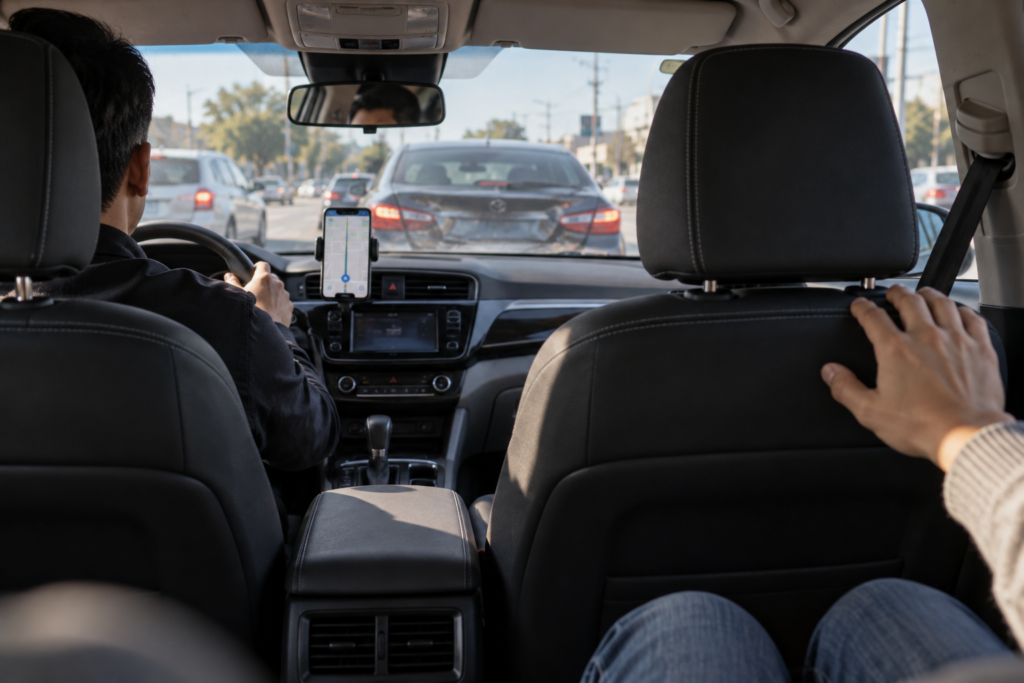
If you were a passenger in an Uber when another vehicle rear-ended the car, your claim can involve more insurance layers than an ordinary two-car accident. As a passenger, you generally are not responsible for operating either vehicle, but liability still has to be determined and the available insurance has to be identified.
California regulates transportation network companies such as Uber through the California Public Utilities Commission. The insurance requirements change depending on whether the driver is merely logged into the app, has accepted a ride, or is actively transporting a passenger. When you are already inside the rideshare vehicle, the trip is in the passenger-transport period, often called Period 3.
Being a Passenger Usually Simplifies One Part of the Fault Analysis
In a typical rear-end collision, investigators examine following distance, speed, braking, traffic conditions, and whether the front vehicle stopped suddenly or for a legitimate reason. A passenger usually has no control over either driver’s operation of the vehicles.
That does not mean liability is automatically decided. The rear driver may be primarily responsible, the Uber driver may have contributed, another vehicle may have caused a chain reaction, or roadway conditions may complicate the sequence.
What being a passenger does change is that the claimant usually does not face the same driver-conduct questions as someone who was operating one of the vehicles.
California Requires Significant Insurance During an Active Ride
The California Public Utilities Commission currently requires transportation network companies to provide $1 million in primary commercial liability insurance during Periods 2 and 3. Period 3 runs from the time a passenger enters the vehicle until the passenger exits.
During Period 3, TNCs must also provide $1 million in uninsured and underinsured motorist coverage. That can become particularly important if the driver who caused the crash has no insurance or insufficient insurance to cover the passenger’s injuries.
The exact policy terms, facts, and coverage investigation still matter. The existence of a $1 million requirement does not mean every passenger automatically receives that amount.
The At-Fault Driver’s Insurance May Be the First Claim
If another driver rear-ended the Uber and caused the crash, that driver’s liability insurance may be a primary source of compensation. The insurer can investigate fault, vehicle damage, medical treatment, prior conditions, and the amount of damages.
If the at-fault driver has inadequate coverage, the TNC’s Period 3 uninsured or underinsured motorist coverage may become relevant. Multiple injured people can also affect how limited coverage is allocated.
The Uber Driver’s Conduct Should Still Be Evaluated
A rear-end impact does not automatically eliminate the possibility that the rideshare driver contributed to the crash. Evidence might show an unsafe lane change, an unnecessary abrupt stop, defective brake lights, or another action that affected the collision.
In many cases, however, the rideshare driver may simply be another injured road user who was struck from behind. The investigation should follow the evidence rather than assume that Uber is responsible merely because the passenger booked the ride through the app.
Preserve the Digital Trip Evidence
A rideshare passenger has evidence that may not exist in an ordinary car accident. Preserve the trip receipt, ride history, pickup and destination information, driver profile, time of the ride, app screenshots, communications, and any post-crash notifications.
Those records can help establish that the passenger was actually in the vehicle during Period 3. They can also identify the driver, vehicle, route, and timing if insurance questions arise later.
The article on what to do after a rideshare accident in California provides a broader checklist for preserving app, scene, insurance, and medical evidence.
Get Medical Care Based on Your Symptoms
A rear-end collision can cause neck, back, shoulder, head, and other injuries, but symptoms vary widely. A passenger should not assume that a low-speed impact caused no injury, nor should treatment be exaggerated because a commercial policy may apply.
The article on the importance of prompt medical treatment after an accident explains why the medical timeline can matter when an insurer later questions whether symptoms were caused by the crash.
Do Not Assume Uber Automatically Handles Everything
A passenger may report the crash through the app, receive communications from a TNC representative or insurer, and still need to deal with the at-fault driver’s insurance, medical bills, health insurance, or other coverage.
Statements given early in the process can affect how insurers evaluate the claim. Provide accurate facts, but understand which insurer is asking questions and why before signing broad authorizations or making assumptions about fault and coverage.
The article on whether you need an Uber accident lawyer explains when multiple insurers, serious injuries, disputed liability, or coverage issues can make legal assistance more useful.
Damages Depend on the Injury, Not the Brand of the Ride
A passenger’s recoverable damages depend on the losses caused by the accident. Potential categories can include reasonable medical expenses, lost earnings, future care, pain, suffering, emotional distress, physical impairment, and other compensable harm supported by the evidence.
The fact that the passenger was riding in an Uber does not automatically increase the value of the injuries. The TNC relationship primarily affects insurance and evidence rather than creating a separate measure of damages.
Uber Passenger Claims in West Covina and Los Angeles County
For a rideshare collision in West Covina, the San Gabriel Valley, or Los Angeles County, preserve the trip record and ordinary accident evidence at the same time. Obtain the drivers’ information, photograph the vehicles and scene when possible, identify witnesses, and save communications from the app and insurers.
When an Uber passenger is rear-ended, the coverage picture can be favorable because California requires substantial Period 3 insurance. The claim still has to establish fault, causation, and damages, and the specific policies must be reviewed before drawing conclusions about available compensation.
