


Rights of Pedestrians Injured in California Car Accidents
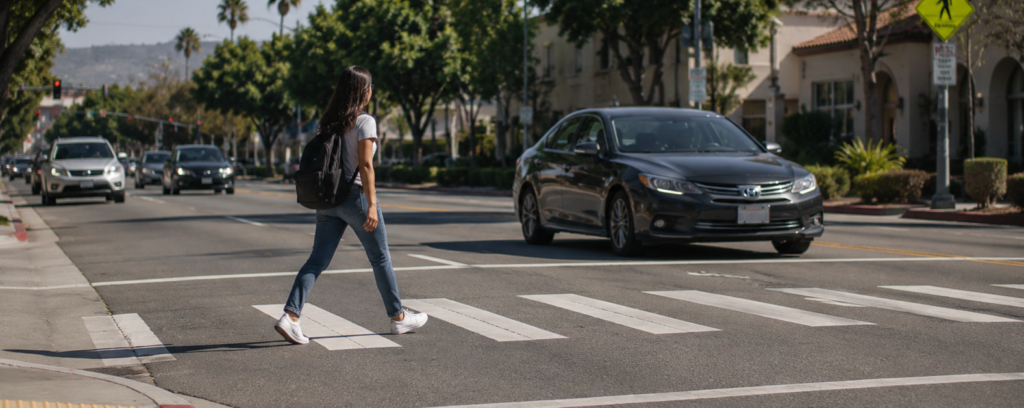
A pedestrian injured by a vehicle in California may have the right to pursue compensation when another person’s negligence caused the collision. That right is not limited to people struck inside a painted crosswalk, and it is not automatically lost because an insurance company argues that the pedestrian shares some responsibility.
The practical questions are usually more specific: who failed to use reasonable care, what traffic rules applied, what evidence can prove the sequence of events, what insurance is available, and what losses resulted from the injuries.
An Injured Pedestrian Can Bring a Negligence Claim
California personal injury law generally allows an injured person to seek damages when another party’s negligence caused the harm. In a pedestrian case, negligence may involve a driver who failed to yield, drove too fast for the conditions, was distracted, was impaired, made an unsafe turn, or otherwise failed to use reasonable care.
A claim can also involve more than one responsible person or entity. Depending on the facts, questions may arise about a vehicle owner, an employer whose employee was driving for work, a rideshare driver, or another party whose conduct contributed to the crash.
Crosswalk Rights Are Important, but They Are Not the Whole Case
California Vehicle Code section 21950 requires drivers to yield to pedestrians crossing within marked crosswalks and unmarked crosswalks at intersections. Drivers must also exercise due care for pedestrian safety.
The statute also places responsibilities on pedestrians. A pedestrian may not suddenly leave a curb or other place of safety and move into the path of a vehicle that is so close as to create an immediate hazard. When a pedestrian crosses outside a crosswalk, Vehicle Code section 21954 generally requires the pedestrian to yield to vehicles that are close enough to create an immediate hazard.
These rules help frame the case, but the actual result depends on the evidence. A driver may still be negligent even when a pedestrian was outside a crosswalk, and a pedestrian may share fault even when the collision occurred near an intersection.
Shared Fault Does Not Automatically Eliminate the Claim
California follows comparative fault. If an injured pedestrian is found partly responsible for the collision, the pedestrian can still potentially recover damages, with the recovery reduced according to the percentage of fault assigned.
This becomes important when an insurer focuses on one unfavorable fact, such as crossing outside a crosswalk or looking at a phone. Those facts may matter, but they do not replace a complete evaluation of the driver’s speed, attention, visibility, braking, right-of-way duties, and opportunity to avoid the impact.
Pedestrians Have the Right to Build Their Own Evidence Record
An injured pedestrian does not have to rely only on the driver’s version of events. Evidence can be collected from the scene and from third parties. Depending on availability, this can include photographs, traffic-camera or surveillance footage, dashcam video, witness information, 911 records, police reports, vehicle damage, medical documentation, and other records.
Preserving time-sensitive evidence early can be important. Businesses, homes, parking lots, transit facilities, and intersection cameras may retain recordings for limited periods. A witness who was easy to locate on the day of the crash may be difficult to find weeks later.
Medical Treatment and Documentation Support the Injury Claim
Pedestrian collisions can cause injuries that are immediately obvious as well as conditions that become clearer after medical evaluation. Emergency care, diagnostic testing, surgery, therapy, rehabilitation, and follow-up treatment can all become part of the medical record.
Those records serve two purposes. They help guide treatment, and they provide evidence connecting the collision to the injuries being claimed. Gaps in treatment do not automatically disprove an injury, but insurers may scrutinize delays or inconsistent records when evaluating causation and damages.
Compensation Can Address Financial and Non-Financial Harm
Depending on the facts, a pedestrian injury claim can include economic damages such as medical expenses, lost earnings, property damage, and future financial losses that are supported by evidence. Future medical care or reduced earning capacity may require medical, employment, vocational, or other supporting information.
California also recognizes non-economic damages for harms that do not come with a bill. These can include physical pain, mental suffering, emotional distress, inconvenience, physical impairment, disfigurement, and loss of enjoyment of life when supported by the evidence.
Insurance Coverage Can Come From More Than One Source
The at-fault driver’s liability insurance is often the first coverage examined, but it may not be the only possible source. A pedestrian hit by an uninsured driver or an unidentified hit-and-run driver may need to review whether uninsured motorist coverage applies under an available automobile policy.
Other policies can become relevant depending on who was driving and why. For example, a collision involving a rideshare driver or an employee acting within the scope of work can raise additional coverage and liability questions.
There Are Deadlines for California Injury Claims
California generally provides two years from the date of injury to file a personal injury lawsuit, but that general rule has important exceptions. Claims involving a government entity can require an administrative claim much sooner, generally within six months for personal injury.
Deadlines should not be calculated from a generic article when the facts involve a public vehicle, government roadway condition, a minor, delayed discovery of injury, or another circumstance that may affect the analysis. Evidence preservation also creates a practical reason to act well before the limitations period approaches.
Rights After a Pedestrian Accident in West Covina and the San Gabriel Valley
For pedestrians injured in West Covina, elsewhere in the San Gabriel Valley, or across Los Angeles County, the same California rules apply, but every claim depends on the specific roadway, traffic controls, visibility, driver conduct, injuries, and insurance involved.
The firm’s pedestrian accident page provides more information about these claims. People dealing with broader injury and insurance issues can also review the firm’s personal injury resources.
The central right is the right to have the claim evaluated on the full evidence rather than on assumptions about pedestrians, crosswalks, or insurance company fault arguments. A careful review should address liability, injuries, damages, coverage, and deadlines together.
