


Qué hacer después de un accidente de viaje compartido en California
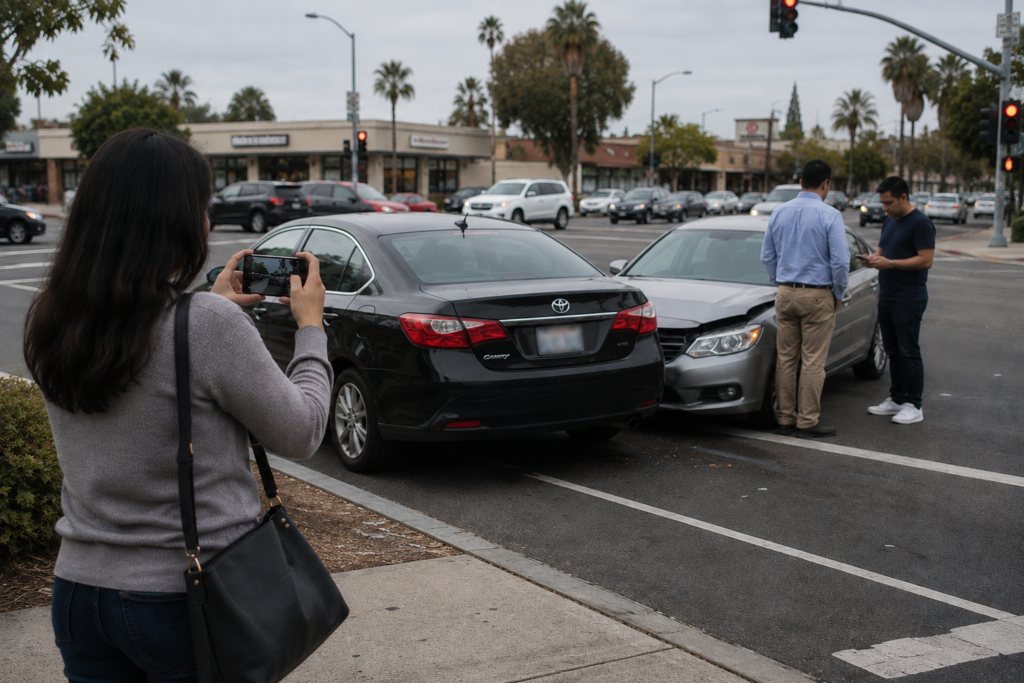
Un accidente de Uber o Lyft puede implicar las mismas preocupaciones inmediatas de seguridad y médicas que cualquier otro choque, pero las cuestiones de seguro pueden ser más complicadas. El estado del conductor en la aplicación puede afectar la cobertura de qué empresa de transporte se aplica, por lo que conservar información específica de viajes compartidos puede ser tan importante como fotografiar los vehículos.
Ya seas pasajero, conductor de viajes compartidos, otro automovilista, peatón o ciclista, los primeros pasos deben proteger tu salud y preservar la información que luego pueda ser necesaria para determinar la culpa y la cobertura.
Aborde primero la seguridad y las necesidades médicas
Aléjese del peligro inmediato del tráfico si es seguro hacerlo y llame al 911 cuando se necesite ayuda de emergencia. Un choque grave puede producir lesiones que no son fáciles de evaluar en el lugar de los hechos, incluidas lesiones en la cabeza, lesiones internas o lesiones de tejidos blandos que se vuelven más notorias más adelante.
La evaluación médica también crea un registro de los síntomas, el diagnóstico y el tratamiento. Dicho registro puede volverse importante si una aseguradora posteriormente disputa si una lesión fue causada por la colisión o argumenta que la condición no era grave.
Conserve la información del viaje compartido
Si utilizas Uber, Lyft u otra empresa de red de transporte, guarda la información del viaje antes de que sea difícil de recuperar. Los registros útiles pueden incluir capturas de pantalla que muestren el nombre del conductor, el vehículo, la ruta, el punto de partida y el destino, la hora del viaje, el recibo y cualquier mensaje dentro de la aplicación relacionado con el trayecto.
Si usted fue otro usuario de la vía que fue impactado por un vehículo de viajes compartidos, documente cualquier información disponible que demuestre que el vehículo se estaba utilizando para una actividad de viajes compartidos. El estado de la aplicación del conductor puede afectar el análisis del seguro, por lo que este detalle puede importar incluso cuando la causa de la colisión en sí parezca sencilla.
Documentar el accidente como cualquier otro accidente grave
Si puede hacerlo de manera segura, fotografíe los vehículos, los daños por impacto, las placas de matrículas, la calzada, los semáforos, las marcas viales, los escombros, las marcas de neumáticos, el clima y el área circundante. Recopile los nombres y la información de contacto de los testigos en lugar de asumir que su información aparecerá en un informe policial.
También conserve sus propios registros después de abandonar la escena. Guarde los documentos médicos, facturas, fotografías de las lesiones, registros de reparaciones o daños a la propiedad, información sobre pérdida de salarios, recibos y comunicaciones de las aseguradoras o de la empresa de viajes compartidos.
Reportar el accidente a través de la plataforma de viajes compartidos
Los pasajeros y conductores generalmente deben utilizar el proceso de notificación de accidentes de la empresa de viajes compartidos para que la empresa tenga conocimiento de que ocurrió una colisión. Guarde las pantallas de confirmación, correos electrónicos, números de reclamo y otras comunicaciones en lugar de confiar en que la aplicación conservará todo indefinidamente.
Informar sobre el accidente no requiere que especules sobre la culpa o el valor a largo plazo de tus lesiones. Se puede proporcionar información fáctica sin adivinar el pronóstico médico o aceptar la caracterización de una aseguradora sobre lo sucedido.
Comprenda por qué el estado de la aplicación es importante para el seguro de TNC en California
La Comisión de Servicios Públicos de California divide el servicio de las empresas de transporte en red en distintos periodos. El periodo 1 es cuando la aplicación del conductor está abierta y el conductor espera una coincidencia. El periodo 2 comienza después de que el conductor acepta una coincidencia y se desplaza para recoger al pasajero. El periodo 3 abarca el tiempo que el pasajero está en el vehículo hasta que el pasajero baja.
Los requisitos actuales de la CPUC establecen un mínimo de $50.000 por persona, $100.000 por siniestro y $30.000 por daños materiales en la cobertura principal durante el Período 1, además de la cobertura de exceso exigida. Durante los períodos 2 y 3, las empresas de transporte de pasajeros (TNC) deben ofrecer $1 millón en seguro comercial principal. La CPUC también exige $1 millón en cobertura para conductores sin seguro o con seguro insuficiente durante el período 3.
Esos requisitos no significan que cada persona lesionada reciba automáticamente el límite de la póliza. La cobertura aún depende del estado del conductor, la culpa, las lesiones y daños del reclamante, y los términos y la aplicación de las pólizas involucradas.
No dé por sentado que la empresa de transporte compartido es siempre la única aseguradora
Un choque de viajes compartidos puede involucrar la póliza personal del conductor, la cobertura de la empresa de transporte (TNC), la póliza de responsabilidad civil de otro conductor, la cobertura para conductores sin seguro o con seguro insuficiente, u otro seguro según los hechos. La vía de cobertura correcta puede cambiar dependiendo de si el conductor estaba desconectado, esperando una solicitud, viajando hacia un pasajero o transportando a un pasajero.
Esta es una razón por la cual el registro de la aplicación y la cronología de los viajes son importantes. El mismo conductor y el mismo vehículo pueden estar sujetos a diferentes acuerdos de seguro en diferentes momentos.
Tenga cuidado con las declaraciones y publicaciones grabadas tempranamente
Las aseguradoras pueden ponerse en contacto con las personas heridas poco después de un accidente. Una solicitud de información básica es diferente a dar una declaración grabada detallada sobre la velocidad, la atención, las lesiones, los antecedentes médicos previos o la culpa antes de que usted conozca el expediente completo.
Asimismo, un acuerdo de liberación no debe firmarse a la ligera. Una liberación puede dar por terminada la reclamación incluso si posteriormente se necesita tratamiento adicional. Antes de resolver una reclamación por lesiones graves, se deben comprender suficientemente el estado médico y la cobertura disponible para tomar una decisión informada.
Los plazos para la presentación de informes y reclamaciones de accidentes en California siguen vigentes
En California es obligatorio presentar un informe SR-1 ante el DMV en un plazo de 10 días cuando alguien resulte herido o fallezca, o cuando los daños materiales superen los $1.000. Este requisito del DMV es independiente de la obligación de notificar el accidente a las fuerzas del orden, a una aseguradora, a Uber, a Lyft o a otra empresa de transporte compartido.
El plazo de prescripción general para una demanda por lesiones personales en California es de dos años a partir de la fecha de la lesión, sujeto a excepciones. Una reclamación relacionada con el gobierno puede implicar un plazo administrativo mucho más corto. El estatus de viajes compartidos no elimina esas normas más amplias de California.
Reclamaciones por accidentes de viajes compartidos en West Covina y el condado de Los Ángeles
Los vehículos de viajes compartidos operan en todo West Covina, el Valle de San Gabriel y el condado de Los Ángeles, y un choque puede ocurrir mientras un conductor espera una solicitud, se dirige a recoger a un pasajero o transporta a uno. Reconstruir esa cronología puede ser fundamental para identificar la cobertura aplicable.
De la firma Página de accidentes de Uber y Lyft explica estos casos con más detalle. La de la firma página de accidente de coche proporciona información adicional sobre pruebas, lesiones y reclamaciones por accidentes en California.
Los pasos más útiles después de un accidente de viaje compartido son prácticos: atender las necesidades médicas, conservar el registro del viaje, documentar la colisión, reportarlo a través de los canales apropiados, guardar las comunicaciones con el seguro e identificar el estado de la aplicación del conductor antes de asumir qué póliza controla el reclamo.
